Menorca migration history is defined not only by who arrived on the island, but by the people, families and traditions that left it and shaped communities elsewhere.
Menorca is often portrayed as a place defined by protection, continuity and restraint. Its history tells a more mobile story.
For much of the past three centuries, Menorca has repeatedly sent people outward into the world. Economic limits, imperial disruption and structural constraint created conditions in which departure was not an exception, but a rational response. These outward migrations did not dilute the island’s identity. They carried it with them.
At a time when debate increasingly focuses on who is arriving in Menorca, its history of migration away from the island is often overlooked. Yet those departures shaped communities far beyond the Mediterranean and left a cultural footprint that remains visible today.
Menorca has never been as inward-looking as it appears.
Why Menorca’s outward migration matters
Menorca’s migration history is defined by repeated outward movement driven by economic constraint, political instability and limited land capacity. Rather than expanding internally, the island historically adapted by exporting labour, families and practical skills to other regions. Understanding this outward migration reframes the island’s identity, showing that movement and adaptation have long been structural features rather than recent disruptions.
An island shaped by constraint and movement
Menorca’s geography, limited land base and shifting political control created structural pressures long before modern tourism or property markets emerged. Agricultural capacity was finite. Strategic military relevance brought periodic disruption rather than stability.
When opportunities narrowed, Menorcans adapted through movement rather than expansion. This pattern of adapting through movement rather than physical expansion echoes modern constraints explored in Menorca’s housing crisis and how limited land capacity continues to shape behaviour today.
This pattern distinguished Menorca from regions that exported merchants or elites. It exported labour, skills and families. Migration was collective rather than individual, motivated by survival and continuity rather than ambition.
Outward movement became part of how the island functioned.
The Turnbull expedition and the Florida diaspora
The most consequential Menorcan migration began in 1768, when Dr Andrew Turnbull, operating within the British colonial system, recruited more than 1,400 Mediterranean settlers to establish an agricultural colony in British East Florida, as documented by the National Park Service.
The majority of those settlers came from Menorca.
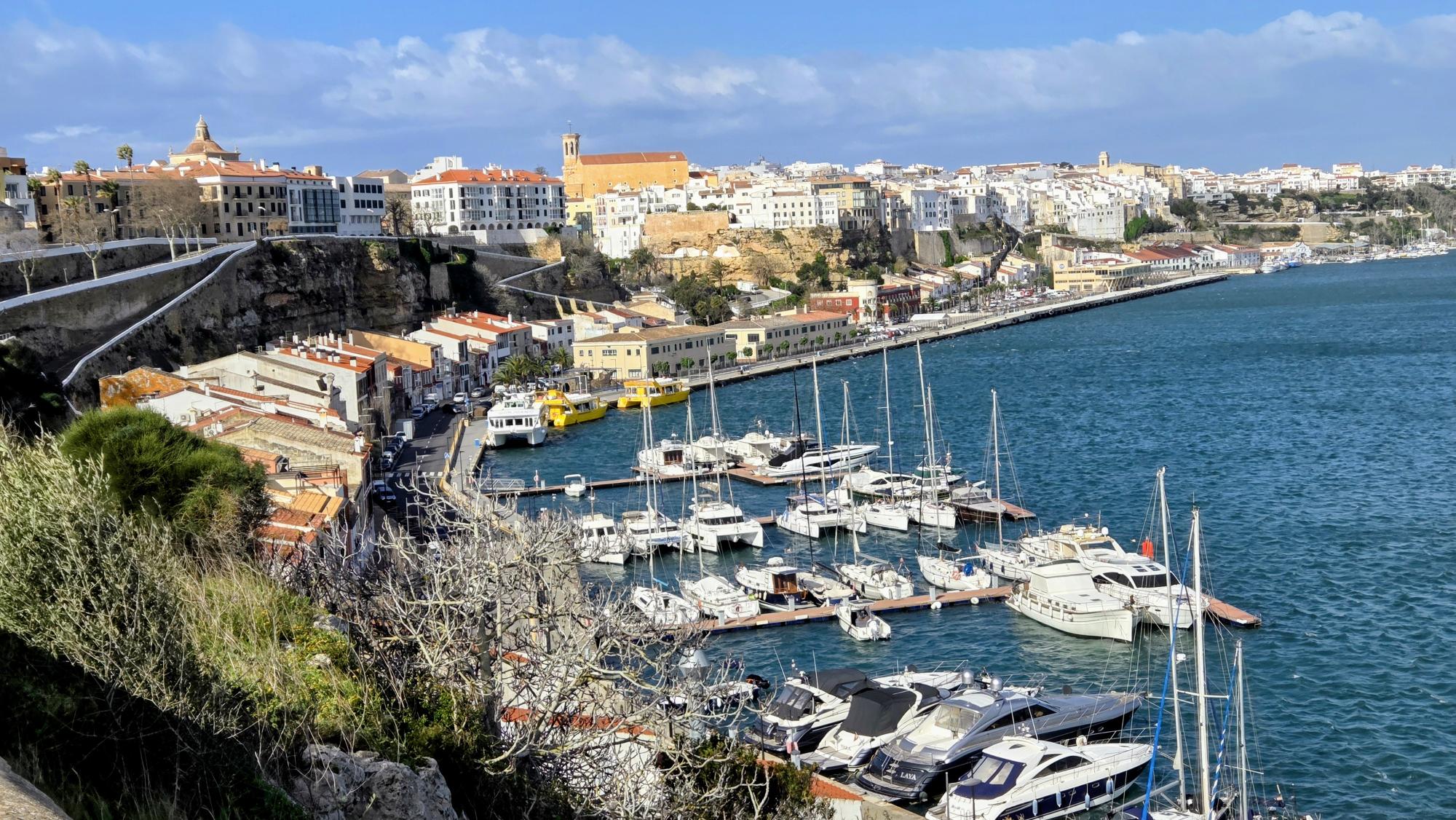
Departing from Port Mahon (today Maó), ships carried entire families across the Atlantic under promises of land and future prosperity. The reality proved severe. Disease and malnutrition took hold during the voyage, and those who survived arrival entered a system of indentured labour at the New Smyrna colony, south of St Augustine.
Over the following years, overwork, hunger and disease devastated the community. By the time the settlement collapsed, roughly half of the original group had died.
This was not conventional migration. It was labour movement shaped by imperial demand and constrained choice.
1777: relocation to St Augustine
The defining shift came in 1777.
A group of Menorcan settlers reached St Augustine to petition the British governor, Patrick Tonyn, for protection from conditions at New Smyrna. Their appeal succeeded. Survivors were granted refuge and permitted to resettle in the city.
Around 600 Menorcans ultimately relocated to St Augustine, transforming the settlement’s civilian structure at a critical moment in its history.
The New Smyrna colony collapsed soon after.
Building St Augustine: labour, faith and continuity
Once established in St Augustine, Menorcans became central to the city’s civilian population.
They stabilised food production, rebuilt elements of local infrastructure and re-established daily economic life. At the same time, they sustained Catholic religious practice during a period of administrative instability under British rule.
Menorcan families formed cohesive communities, maintaining kinship networks and social structures transferred directly from the island. Surnames such as Triay, Pellicer, Usina, Femenia, Segui, Ponce, Rogero, Arnau and Leonardi remain embedded in local records.
This continuity was not incidental. It reflected the transplantation of an island social system into a new environment.
Much of St Augustine’s enduring Mediterranean and Catholic character is now understood to be closely linked to these Menorcan settlers.
Living culture in Florida today
Menorcan heritage in Florida is not confined to historical record. It remains active.
One of the most significant physical links between Menorca and St Augustine is the Golden Book of the Menorcans (Libro de Oro).
This original parish register was maintained by Father Pedro Camps, the Menorcan priest who accompanied the Mediterranean colonists to Florida in 1768. The book records baptisms, marriages and deaths from the New Smyrna colony between 1768 and 1784.
Because many of the settlers were illiterate, these records became the primary evidence of family continuity and survival. Today, the Golden Book is considered one of the most important historical treasures in the archives of the Catholic Diocese of St Augustine. While the original is too fragile for regular handling, it has been digitised and translated to ensure long‑term preservation.
On rare occasions, the Golden Book is also made accessible to the public. A scheduled viewing during the St Augustine History Festival highlighted its continued relevance, allowing descendants and residents to connect directly with the earliest documented Menorcan families.
Institutions such as the Menorcan Cultural Society of St Augustine preserve traditions including language fragments, crafts, music and foodways. Annual events such as Menorcan Heritage Month continue to bring together descendants and local communities.
Cuisine is one of the most visible cultural links. Dishes such as Menorcan clam chowder, adapted locally and associated with the region through the use of datil peppers, reflect continuity through adaptation rather than direct replication.
This living continuity is also recognised formally through Menorcan Heritage Month, held each March to mark the 1777 arrival of the New Smyrna survivors in St Augustine. Rather than focusing solely on celebration, the programme centres on education, visibility and intergenerational connection.
The Menorcan Heritage Celebration acts as the focal point of the month. Alongside traditional food such as Menorcan clam chowder and pilau, events commonly include heritage craft demonstrations, guided walks through the historic Minorcan Quarter, and family genealogy tables where descendants trace their connection back to the original 1768 settlers.
These activities link past and present directly, reinforcing Menorcan identity as something practised and shared rather than simply remembered.
What stands out is that this preservation is largely intergenerational. Menorcan identity in St Augustine is maintained through families and everyday practice rather than museums alone, ensuring it remains part of lived culture rather than historical display.
Florida’s archival collections also preserve oral histories documenting agricultural practices, craftsmanship and daily life, demonstrating intergenerational transmission rather than symbolic preservation through Florida Memory.
As a result, Menorcan descendants continue to form one of the most distinct and enduring cultural threads within St Augustine and the surrounding county, visible in surnames, food, religious life and local identity.
This continuity also extends into St Augustine’s physical landscape. Historic sites linked to Menorcan families and institutions, including early educational spaces established by Menorcan descendants, remain part of how the city understands its own origins and development.
Migration beyond Florida
Florida represents the most visible Menorcan diaspora, but it was not the only destination.
During the nineteenth century, Menorcans migrated to North Africa, particularly Algeria, following patterns seen across the Balearic Islands after French colonial expansion. These movements were often linked to maritime labour and agricultural opportunity.
Migration to Gibraltar also formed part of this wider pattern, supported by its proximity, British administrative structure and economic links to Mediterranean trade.
These movements were typically smaller and less formally documented than the Florida diaspora, but they followed the same underlying logic: mobility as adaptation within constrained systems.
What Menorca exported
Menorca’s influence abroad was not institutional or monumental. It was practical and transferable.
Menorcan communities carried with them:
- maritime and agricultural skills suited to constrained environments
- food traditions shaped by scarcity and adaptation
- Catholic religious practice
- family-based settlement structures
- community cohesion and mutual support systems
These elements enabled rapid stabilisation in new environments. Menorca was not replicated abroad. It was translated.
A personal connection, quietly acknowledged
This history is not abstract for all.
My own family line traces back to the Menorcans who left the island during the Turnbull expedition in 1768 and later resettled in St Augustine. Like many descendants, that connection was not preserved as a continuous narrative, but rediscovered through records, surnames and place.
This pattern reflects the broader nature of Menorca’s outward migration: continuity often survives, but not always visibly.
Rethinking migration and identity
Modern discussion in Menorca often frames migration as a new and disruptive force. Historically, the island has always operated in both directions.
Menorca’s identity endured not because it remained static, but because it adapted. Outward migration was not a rupture. It was a structural response to constraint.
Understanding this history broadens the present debate. It places current pressures within a longer cycle of movement, adaptation and continuity, which also underpins how Menorca is expected to function structurally over the coming decade.
An island that multiplied
Menorca did not lose itself when its people left.
In places such as St Augustine, its cultural influence remained visible through families, food, faith and daily practice. Elsewhere, it persisted more quietly but no less meaningfully.
To understand Menorca fully, it is not enough to look inward. It is necessary to recognise how the island extended itself outward through its people.
This outward extension of Menorca’s identity sits alongside how the island now manages its prehistoric heritage at home through Talayotic Menorca, a UNESCO World Heritage landscape that treats archaeology as part of a living territory rather than a tourist attraction.
Menorca did not simply absorb history. It produced it elsewhere.
Common questions about Menorca migration history
Where did Menorcans migrate historically?
The most significant migration was to Florida in the eighteenth century, particularly to St Augustine. Smaller movements occurred to North Africa, especially Algeria, and to Gibraltar.
Why did Menorcans leave the island?
Migration was primarily driven by economic limitation, political instability and limited land capacity, making outward movement a rational response to constraint.
Is Menorcan culture still visible abroad?
Yes. In places such as St Augustine, cultural elements including surnames, cuisine, religious traditions and community structures remain visible today.
Was migration voluntary?
Migration varied in nature. Some movements were voluntary economic decisions, while others, such as the Turnbull expedition, involved coercive labour conditions and limited choice.