Ciutadella de Menorca is often described as the island’s most beautiful town, but that only explains part of its importance.
For centuries, Ciutadella was Menorca’s political, religious and aristocratic centre. Today, it remains the island’s cultural capital: a city of medieval streets, Gothic churches, hidden courtyards, fishing harbours, prehistoric monuments and one of the Mediterranean’s most distinctive summer festivals.
Unlike many Mediterranean resort towns, Ciutadella is not built around tourism alone. It is a functioning city with year-round life, local traditions, schools, markets and neighbourhoods that still feel deeply Menorcan outside peak season.
That is precisely what makes it different.
In 2026, Ciutadella combines several layers at once: a preserved medieval old town, a UNESCO Biosphere Reserve setting, access to some of Menorca’s best beaches, strong gastronomy and nightlife, deep archaeological heritage, and a slower pace than most Mediterranean destinations.
Is Ciutadella de Menorca Worth Visiting?
Yes. Ciutadella is widely considered one of the most compelling towns in the Balearic Islands, combining a prYes. Ciutadella is widely considered one of the most compelling towns in the Balearic Islands, combining a preserved medieval core, access to some of Menorca’s best beaches, and a stronger sense of local identity than most Mediterranean resort destinations.
It works because it balances historic atmosphere with beach access, walkability, gastronomy, archaeology and a slower Mediterranean rhythm. For many visitors, Ciutadella becomes the emotional centre of Menorca rather than simply a place to stay.
Ciutadella by the Numbers
| Metric | Figure |
|---|---|
| Population (2025) | ~32,431 |
| Location | Western Menorca |
| Distance from Airport | ~45 km |
| Drive Time from Maó | ~1 hour |
| Historic Status | Former capital of Menorca |
| UNESCO Context | Biosphere Reserve |
| Known For | Old town, beaches, harbour, Sant Joan festival |
| Peak Season | June to September |
| Best Months To Visit | May, June, September, early October |
| Closest Famous Beaches | Cala Turqueta, Macarella, Mitjana |
What Makes Ciutadella Different?
The defining characteristic of Ciutadella is the density of history.
Roman traces sit beneath medieval streets. Islamic foundations remain embedded in the urban plan. Gothic churches stand beside aristocratic palaces rebuilt after Ottoman destruction. Prehistoric settlements are only minutes from modern marinas.
The rhythm of the city shifts throughout the day. Mornings revolve around markets and daily routines. Afternoons move toward beaches and harbour life. Evenings bring the old town to life.
Unlike Palma or Ibiza Town, Ciutadella remains lively but never overwhelming. Its scale stays human.
What Most Visitors Misunderstand About Ciutadella
Many visitors assume Ciutadella is simply a beach town.
In reality, it functions more like a historic Mediterranean city that happens to sit beside some of the island’s best coastline.
Outside summer, the pace changes dramatically. The city becomes quieter, more residential and more local. This seasonal contrast is one of the reasons repeat visitors often prefer shoulder season travel.
What To See in Ciutadella
The Historic Centre
Ciutadella’s old town is one of the most important historic areas in Menorca.
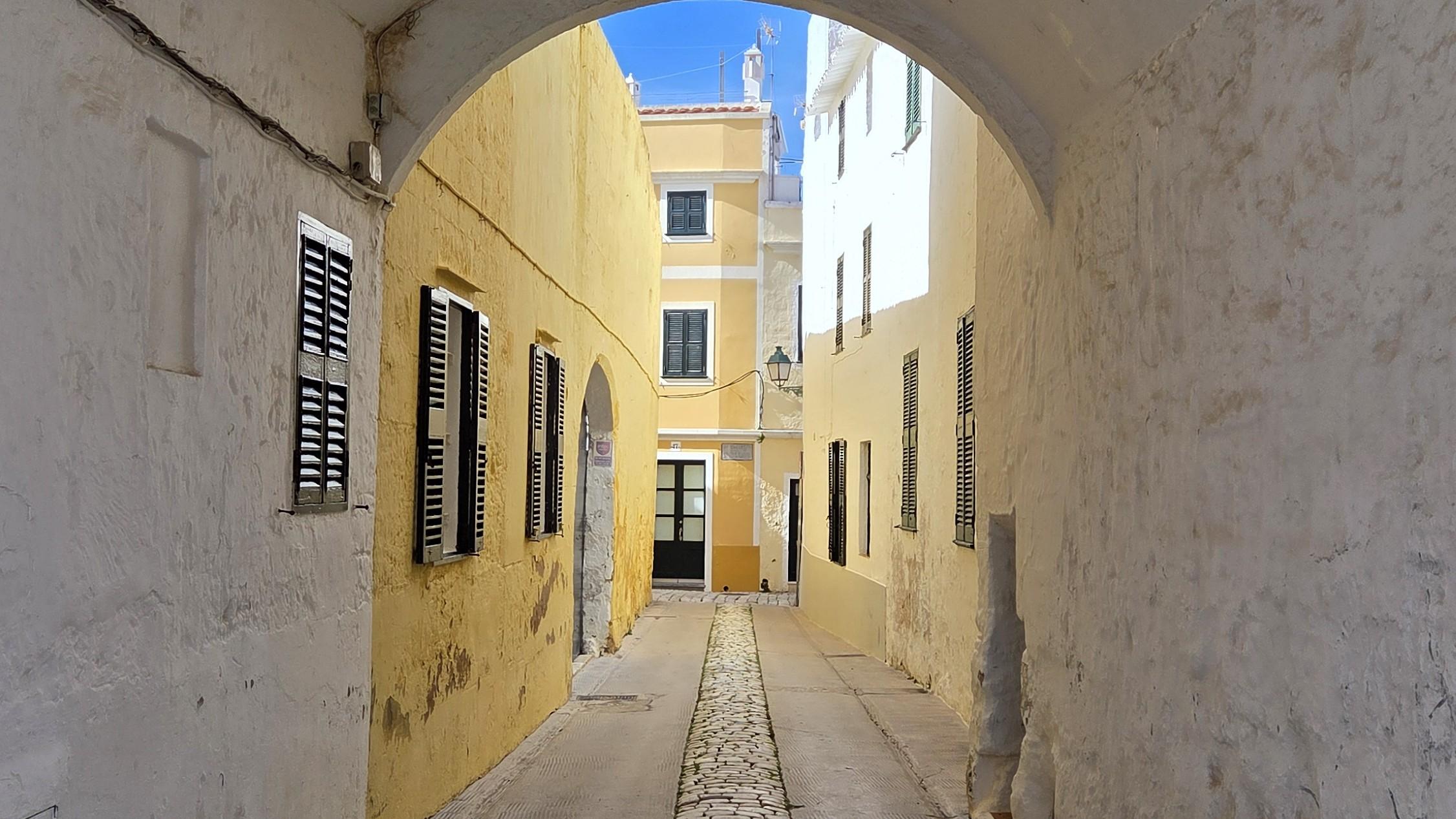
It is a compact network of narrow streets, shaded plazas and stone buildings, with much of the area pedestrianised.
The defining landmarks include the Cathedral of Santa María, Plaça des Born, aristocratic palaces and a series of hidden courtyards.
What makes it exceptional is continuity. It is still a lived-in environment rather than a preserved museum district.
Cathedral of Santa María
Ciutadella Cathedral is one of Menorca’s most important religious buildings.
Constructed in the 14th century on the site of a former mosque, it reflects the island’s transition from Islamic to Christian rule.
Its Gothic structure contrasts with later Baroque additions, creating a layered architectural identity that mirrors the city itself.
The cathedral remains an active religious space and continues to play an important role during festivals and celebrations throughout the year.
Plaça des Born
Plaça des Born acts as Ciutadella’s civic and symbolic centre.
The square’s obelisk commemorates the Ottoman raid of 1558, when the city was attacked and much of the population taken into slavery.
That event still forms a major part of local historical memory.
Today, the square functions as one of the city’s principal gathering spaces and a transition point between the old town and the harbour.
Museums and Cultural Sites
Ciutadella’s museums provide important historical context often missed by visitors focused only on beaches.
Bastion de Sa Font Museum
Located within historic defensive structures, the Municipal Museum traces Menorca’s evolution from prehistoric settlement through Roman, Islamic and modern periods.
Can Saura
Can Saura offers insight into aristocratic Menorcan life through restored interiors and cultural collections.
The building itself is part of the attraction, revealing how elite households once functioned within Ciutadella’s historic core.
Archaeology Around Ciutadella
The wider Ciutadella area contains some of Menorca’s most important prehistoric sites.
Naveta des Tudons
The Naveta des Tudons is Menorca’s most recognisable archaeological monument.
Built around 1000 BC, it functioned as a collective funerary structure and remains one of the defining symbols of Talayotic Menorca.
Its inverted-boat shape gives the monument its name.
Torretrencada and Torrellafuda
These Talayotic settlements reveal the scale and sophistication of Menorca’s prehistoric culture through:
- stone towers
- ceremonial taulas
- defensive structures
- and settlement remains
Unlike traditional museums, these sites exist directly within the landscape itself.
That immersion is part of what makes Menorca’s archaeology distinctive.
Hidden Places Most Visitors Miss
Beyond the major landmarks, Ciutadella contains several overlooked locations that add depth to the city.
Pedreres de s’Hostal
A former sandstone quarry transformed into a cultural and performance space with sculpted stone walls, gardens and open-air events.
Stolpersteine Memorials
Small brass plaques embedded in the pavement commemorating Menorcans who died in Nazi concentration camps after the Spanish Civil War.
Cala Morell Necropolis
A dramatic group of prehistoric burial caves carved directly into coastal cliffs overlooking the sea.
Hidden Courtyards
Some of Ciutadella’s most beautiful spaces remain invisible from the street, hidden behind partially open entrances and historic stone façades.
Best Beaches Near Ciutadella
Ciutadella’s strongest natural advantage is its access to Menorca’s south coast.
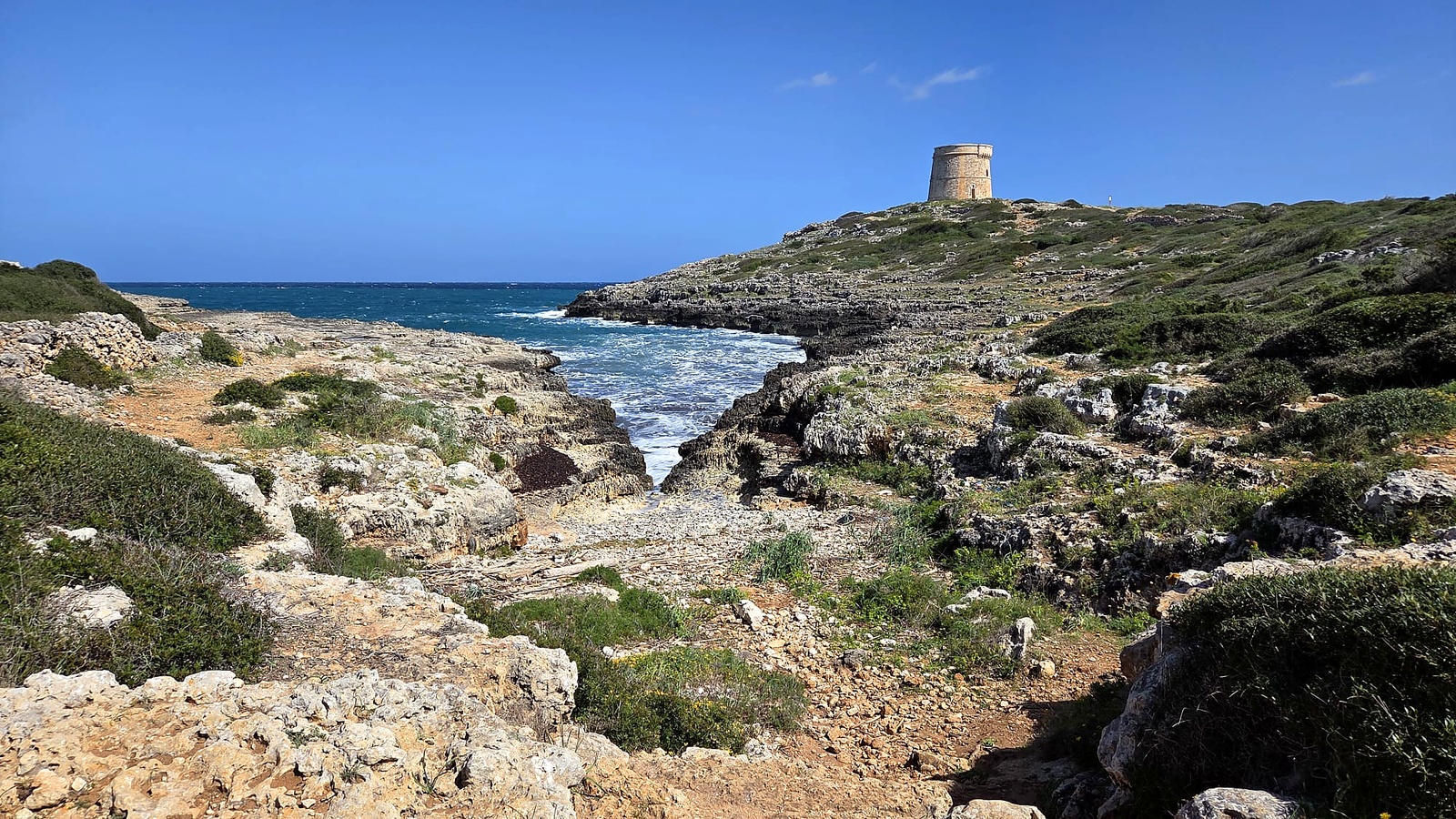
The most famous beaches include Cala Turqueta, Cala Macarella and Cala Mitjana, all known for white sand and clear turquoise water.
However, these beaches are heavily regulated during summer due to environmental pressure and parking restrictions.
Closer to the city, beaches such as Cala Blanca and Cala Santandria offer easier access and more practical family logistics.
The key differences between these beaches are not beauty, but accessibility, crowding and infrastructure.
Beach Comparison Guide
| Beach | Best For | Atmosphere | Access | Crowds |
|---|---|---|---|---|
| Cala Turqueta | Scenic swimming | Iconic | Moderate | Very high |
| Cala Macarella | Classic Menorca experience | Dramatic | Moderate | Extremely high |
| Macarelleta | Quieter swimming | Secluded | Difficult | High |
| Cala Blanca | Families | Residential | Easy | Moderate |
| Cala Santandria | Relaxed swimming | Calm | Easy | Moderate |
| Son Xoriguer | Water sports | Resort atmosphere | Easy | Moderate |
| Cala Morell | Coastal scenery | Rugged | Easy | Lower |
In practice, Cala Turqueta and Macarella dominate social media attention, while Cala Blanca and Santandria often work better for easier day-to-day family use.
Ciutadella Harbour and Marina
The harbour is one of Ciutadella’s defining spaces.
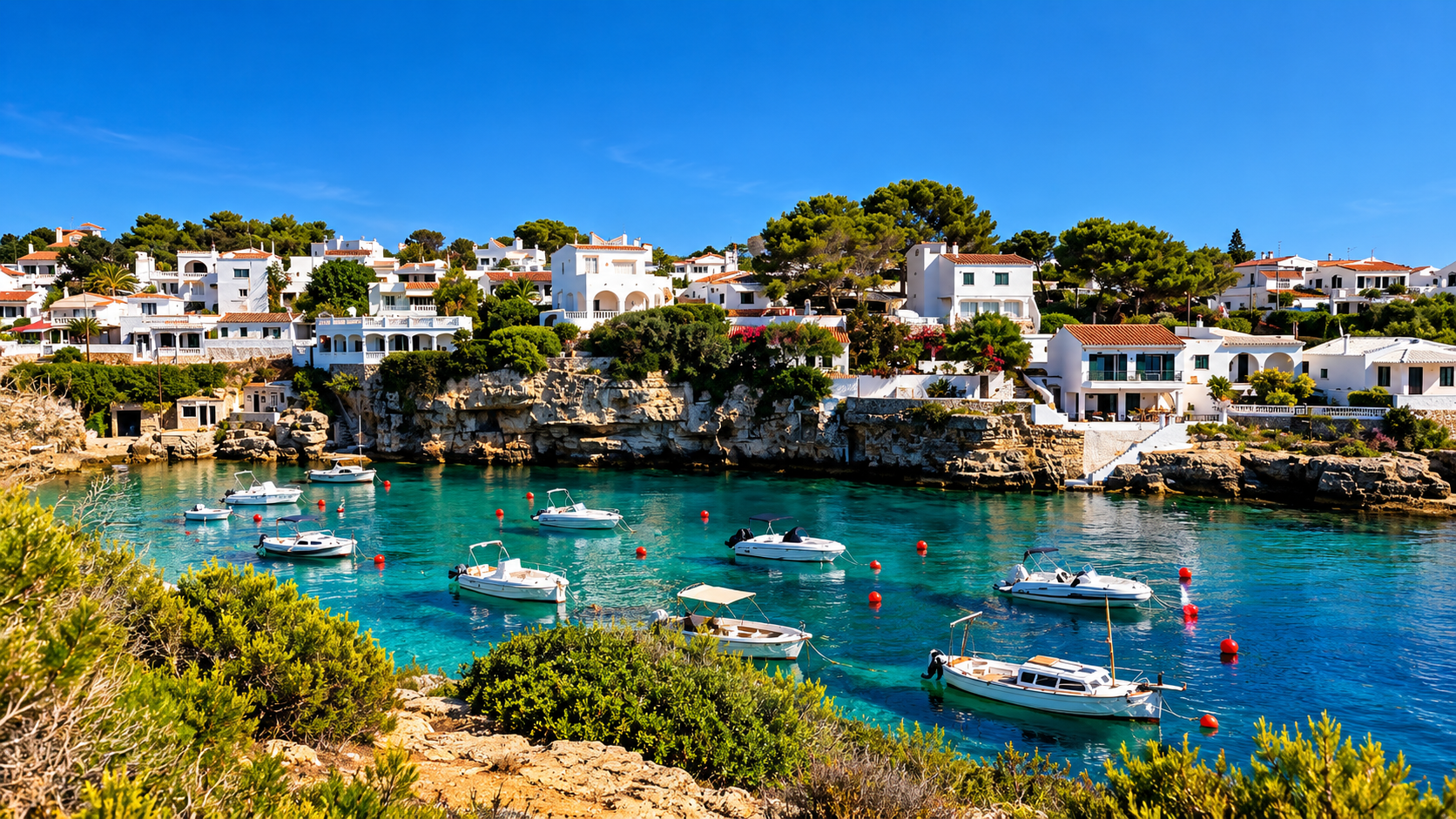
During the day, it functions as a working fishing port. In the evening, it becomes one of the city’s main social centres.
Restaurants, terraces and bars line the waterfront, while fishing boats and yachts remain integrated into daily harbour activity.
The Castell de Sant Nicolau guards the harbour entrance and reflects the strategic importance the port historically held for the island.
Boat trips and coastal excursions also depart from here throughout summer.
Food and Dining in Ciutadella
Ciutadella is one of Menorca’s strongest dining destinations.
The city combines:
- traditional Menorcan cuisine
- seafood restaurants
- tapas bars
- contemporary Mediterranean dining
- and increasingly strong café culture
What To Eat
The defining local dishes include:
- caldereta de llagosta (lobster stew)
- Mahón cheese
- sobrassada
- stuffed aubergines
- ensaimadas
- seafood rice dishes
Mercat des Peix
The Fish Market remains one of Ciutadella’s most authentic culinary experiences.
Unlike heavily commercialised tourist markets elsewhere in Spain, this remains an actively local environment used daily by residents.
Morning visits reveal a very different side of the city from the beach-oriented tourism experience.
Sant Joan Festival
Ciutadella’s defining cultural event is the Festes de Sant Joan, held every year on 23–24 June.
This is not simply a tourist festival.
It remains deeply embedded in Menorcan identity and combines:
- medieval traditions
- horse processions
- religious ceremonies
- music
- and intense social participation
The horse displays within the old town are among the most distinctive cultural events anywhere in the Mediterranean.
Accommodation during Sant Joan should be booked many months in advance.
Living in Ciutadella
Ciutadella functions very differently in winter compared with summer.
Outside peak season, the city becomes quieter, more local and more residential. Unlike purely resort-led areas, however, it does not shut down completely.
The city retains:
- schools
- supermarkets
- cafés
- healthcare services
- sports facilities
- and year-round communities
This is one reason many people relocating to Menorca prefer Ciutadella over seasonal coastal developments.
Living in Ciutadella: Advantages vs Challenges
| Advantages | Challenges |
|---|---|
| Strong historic atmosphere | Summer crowding |
| Year-round population | Tight housing market |
| Excellent restaurant scene | Parking pressure |
| Access to major beaches | Distance from Maó hospital |
| Strong community identity | Seasonal tourism intensity |
| Walkable old town | Rising property prices |
| Better nightlife than much of Menorca | Limited long-term rentals |
Property Prices
Average property prices in Ciutadella are now above €4,000 per square metre in many areas.
Premium coastal properties and restored historic homes are considerably higher.
The market increasingly reflects scarcity rather than expansion.
Climate and Best Time To Visit
Ciutadella has a classic Mediterranean climate with warm summers, mild winters and long shoulder seasons.
However, seasonality changes the experience of the city dramatically.
Seasonal Breakdown
| Season | Average Conditions | What It Feels Like | Best For |
|---|---|---|---|
| Spring (March–May) | Mild and greener | Calm and scenic | Walking, archaeology, cycling |
| Summer (June–August) | Hot and dry | Maximum energy | Beaches, nightlife, festivals |
| Autumn (September–October) | Warm sea, fewer crowds | More balanced | Dining, swimming, slower travel |
| Winter (November–February) | Cooler and quieter | Authentic local atmosphere | Long stays, relocation scouting |
Monthly Average Temperatures in Ciutadella
| Month | Average High | Average Low |
|---|---|---|
| January | 14°C | 8°C |
| February | 14°C | 8°C |
| March | 16°C | 9°C |
| April | 18°C | 11°C |
| May | 22°C | 14°C |
| June | 27°C | 18°C |
| July | 30°C | 21°C |
| August | 30°C | 22°C |
| September | 27°C | 20°C |
| October | 23°C | 16°C |
| November | 18°C | 12°C |
| December | 15°C | 9°C |
Transport and Access
Ciutadella is well connected by Menorcan standards, but transport still requires planning during peak season.
| Mode | Route | Typical Cost | Notes |
|---|---|---|---|
| Bus | Ciutadella–Maó | €7–€8 | Reliable year-round |
| Taxi | Local | ~€1.75/km | Airport transfers higher |
| Car Rental | Island-wide | €25–€70/day | Strongly recommended in summer |
| Ferry | Mallorca/mainland | €45–100+ | Seasonal variation |
| Bike Hire | Local | €15–€20/day | Mostly flat terrain |
For beaches and archaeology, a car remains highly useful.
For the old town alone, it is unnecessary.
Things To Do Beyond the Obvious
Many visitors underestimate how much there is to do around Ciutadella beyond beaches.
Walk the Camí de Cavalls
The historic coastal path passes through some of Menorca’s most dramatic scenery near Ciutadella.
The sections toward:
- Cala Morell
- Punta Nati
- Cala Turqueta
- and Son Saura
are particularly impressive.
Punta Nati Lighthouse at Sunset
The exposed western landscape around Punta Nati feels almost lunar.
Dry stone walls, flat rock and dramatic skies create one of Menorca’s most atmospheric sunset locations.
Explore the Old Town at Night
Ciutadella changes character after dark.
Warm stone walls, low lighting and quiet alleyways create a far more atmospheric experience than daytime tourism alone suggests.
Discover Menorcan Artisan Culture
Hidden workshops throughout the old town still produce:
- leather goods
- ceramics
- jewellery
- and handmade local products
This quieter creative layer is often overlooked.
The Strategic Importance of Ciutadella
Ciutadella increasingly sits at the centre of Menorca’s wider tourism and sustainability debate.
Questions around:
- tourism pressure
- housing affordability
- conservation
- seasonality
- infrastructure
- and environmental limits
The city represents both the success and challenge of Menorca’s tourism model.
Its beauty survives precisely because development remained more constrained than in many Mediterranean destinations. But that same scarcity now creates pressure around affordability, transport and long-term balance. In many ways, Ciutadella has become the clearest example of the wider Menorca question:
How do you preserve authenticity while remaining economically viable?
What defines Ciutadella today
Ciutadella is not simply a destination.
It is a city shaped by history, constrained by geography, influenced by tourism and defined by its ability to preserve identity under pressure.
Prehistoric monuments, medieval architecture, Ottoman history, fishing culture and modern tourism all coexist within a space that can be crossed on foot in less than an hour.
Visitors may arrive for the beaches, but what defines the experience is everything else: the atmosphere of the old town at night, the layers of history, the contrast between seasons, and the sense that the city still belongs fundamentally to Menorca itself.
That combination is increasingly rare in the Mediterranean.
Common Questions About Ciutadella de Menorca
Is Ciutadella worth visiting?
Yes. Ciutadella is widely considered one of the most beautiful and culturally rich towns in Menorca.
How many days do you need in Ciutadella?
Three days is enough to explore the city itself, while five to seven days allows time for beaches and archaeology.
Is Ciutadella better than Maó?
Ciutadella is generally considered more atmospheric and historic, while Maó is more practical and administrative.
What are the best beaches near Ciutadella?
Cala Turqueta, Cala Macarella, Cala Mitjana, Cala Blanca and Cala Santandria are among the most popular.
What is Ciutadella famous for?
Ciutadella is best known for its old town, harbour, Sant Joan horse festival, archaeology and nearby beaches.
Is Ciutadella good in winter?
Yes. Winter offers a quieter and more authentic view of Menorca focused on local life and slower travel.
Is Ciutadella expensive?
Accommodation becomes expensive during peak summer, particularly during Sant Joan, but everyday dining and local experiences remain moderate compared with many Mediterranean resort destinations.