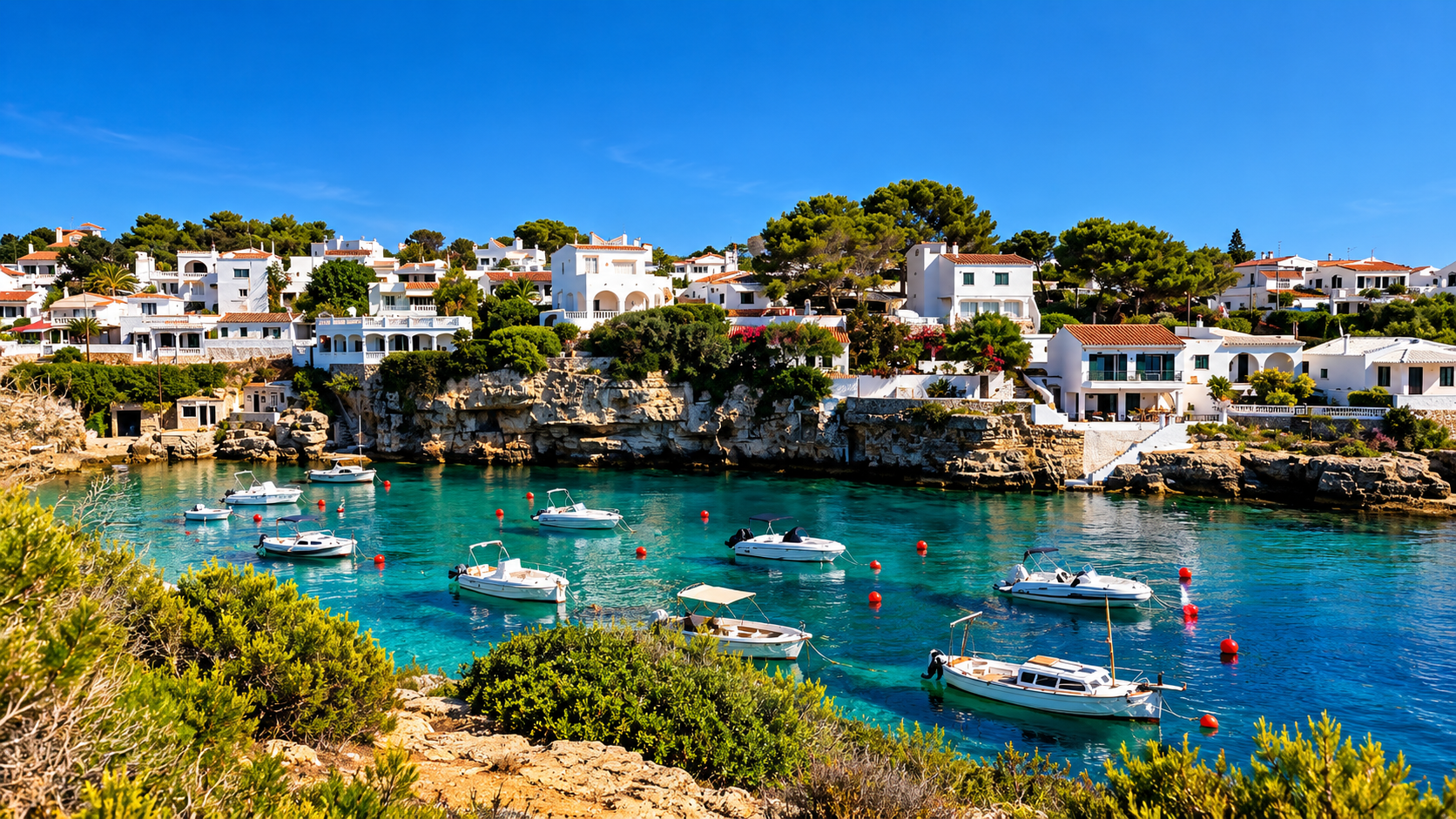
Menorca luxury travel is increasingly being recognised as one of Europe’s leading low-impact destinations, defined by restraint rather than scale.
As travel shifts towards quieter, more environmentally conscious experiences, the island’s UNESCO Biosphere Reserve status, slower pace and growing network of boutique hotels have positioned it at the forefront of a different kind of luxury. One that prioritises space, authenticity and long-term sustainability over volume.
Menorca luxury travel is increasingly defined by low-impact design, environmental restraint and smaller-scale hospitality rather than traditional Mediterranean mass tourism.
Why is Menorca becoming a luxury destination?
Menorca is becoming a luxury destination because it offers space, privacy and environmental quality rather than high-density tourism. Its Biosphere Reserve status, limited development and growing number of boutique hotels have created a model of low-impact luxury aligned with modern travel demand.
Low-impact luxury in Menorca refers to high-quality travel experiences delivered at a smaller scale, prioritising environmental protection, architectural restraint and long-term sustainability over visibility or volume.
A slower pace is becoming a defining advantage
Menorca has moved in a different direction from many Mediterranean destinations, deliberately avoiding high-volume tourism and the intensity that often comes with it.
The island’s natural rhythm, shaped by protected landscapes and smaller urban centres such as Maó and Ciutadella, creates an environment that feels noticeably calmer. This is not simply a lack of activity, but a different structure, where movement is less pressured and time is used differently.
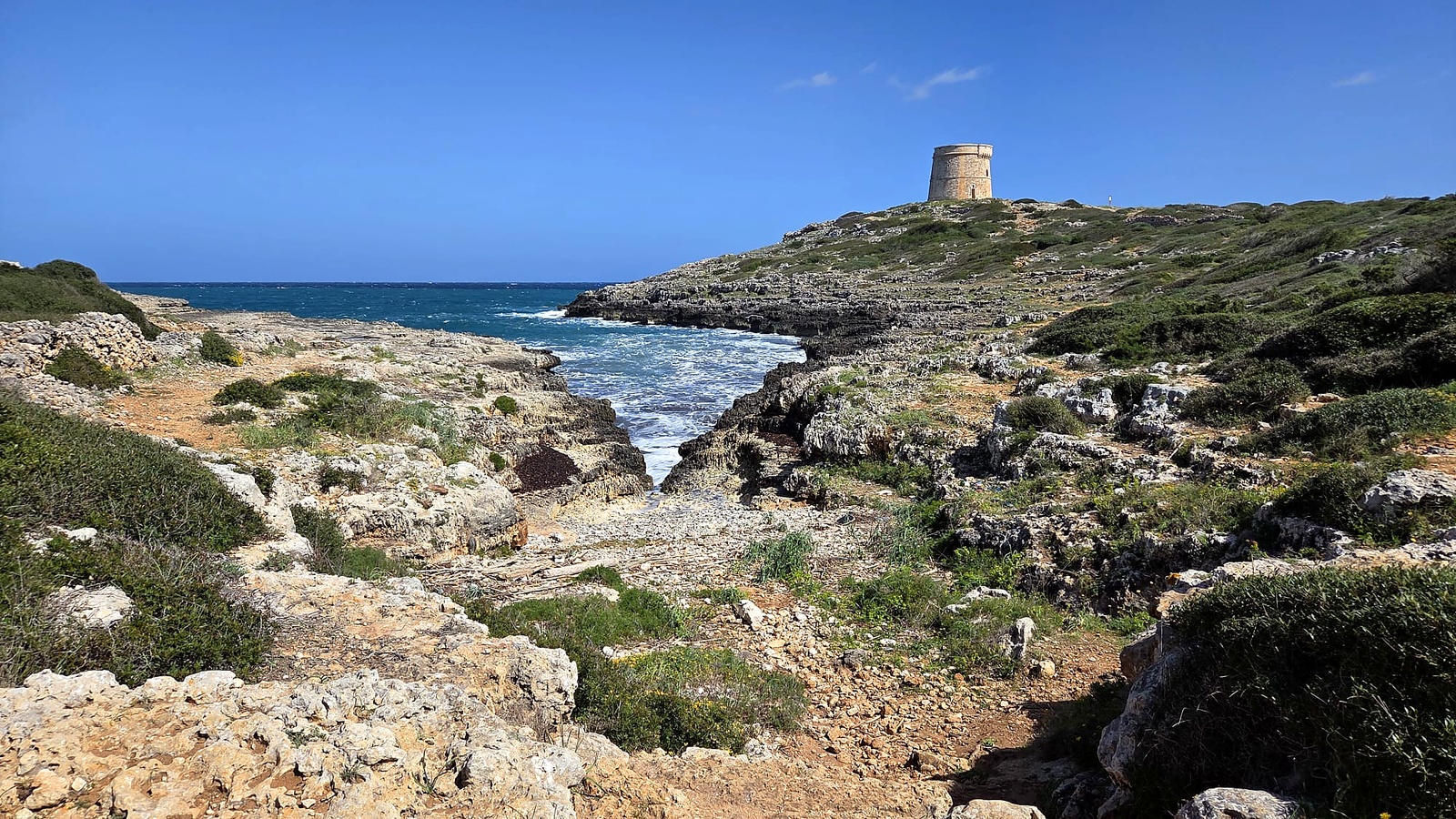
Walking and cycling routes reinforce this. The Camí de Cavalls, which encircles the island, has become one of the clearest expressions of this slower approach, encouraging exploration that is gradual rather than compressed.
Menorca’s designation as a UNESCO Biosphere Reserve further strengthens this model, embedding conservation into how the island is experienced rather than treating it as a separate concept.
Luxury is being redefined through smaller-scale hospitality
The island’s accommodation sector reflects this same direction.
Rather than large-scale development, growth has come through boutique hotels, restored estates and agroturismos that prioritise character and integration with the surrounding environment.
Properties such as Villa Le Blanc illustrate how higher-end hospitality can exist without dominating the landscape, using natural materials, coastal positioning and architectural restraint to create a more balanced experience. At the same time, restored estates like Vestige Son Vell represent a different approach to luxury, one rooted in heritage, scale and connection to the land.
This shift is significant. It moves luxury away from visibility and towards experience.
Sustainability is not an add-on, but a foundation
Because Menorca operates within the framework of a Biosphere Reserve, sustainability is not optional.
Many hotels have moved beyond surface-level initiatives and are embedding environmental practices into how they operate. This includes reducing single-use plastics, improving water efficiency and sourcing materials locally.
Examples across the island show a consistent pattern. Cristine Bedfor has implemented a plastic-free approach, with refillable glass water systems and partnerships with local producers. Suites del Lago, part of Lago Resort Menorca, has adopted hybrid solar systems, native planting and certified sustainability frameworks to reduce energy and water consumption.
These are not isolated cases. They reflect a broader shift towards hospitality that is measured, resource-aware and aligned with the island’s long-term constraints.
Gastronomy is increasingly tied to the landscape
Food is becoming one of the clearest expressions of this low-impact model.
Across the island, hotels and rural estates are reconnecting dining with the land itself. Rather than importing ingredients or focusing on volume, many properties are growing and sourcing locally, often within their own estates.
At Vestige Son Vell, menus are shaped by produce grown on-site, creating a direct link between the landscape and the dining experience. At Alcaufar Vell, set within a large protected estate, the emphasis is on seasonal produce prepared in a way that reflects both tradition and setting.
This approach aligns with a broader shift in European travel, where provenance, sustainability and simplicity are increasingly valued over complexity.
Low-impact luxury is becoming the dominant model
The appeal of Menorca is not built on excess.
It comes from a combination of environmental quality, controlled development and a consistent sense of space. The island offers a version of luxury that is less visible but more durable, shaped by biodiversity, architectural restraint and a deliberate avoidance of over-expansion.
This places Menorca within a growing category of destinations where luxury is defined by experience rather than scale. Unlike Ibiza and Mallorca, where luxury is often expressed through scale and visibility, Menorca’s model is defined by restraint, regulation and environmental limits.
This approach connects closely to broader environmental pressures explored in Menorca climate change and its long-term impact on the island.
A direction that aligns with wider travel shifts
The rise of this model is not happening in isolation. This shift reflects broader European travel trends towards lower-density, experience-led tourism.
Across Europe, travellers are increasingly moving away from high-density destinations towards places that offer clarity, space and a more considered experience. Menorca fits this shift naturally.
Its relatively controlled development, combined with its environmental designation, means it is not having to reinvent itself. It is continuing along a path that already existed, but is now more relevant.
A long-term positioning rather than a trend
What makes Menorca distinctive is that this is not a short-term repositioning.
The island has spent decades limiting development, protecting its coastline and maintaining a balance between tourism and environment. The current rise in low-impact luxury is therefore less a transformation and more a recognition of what already exists.
This gives Menorca a structural advantage. It is not adapting to the trend, it is already aligned with it.
Common questions about Menorca as a luxury destination
Is Menorca considered a luxury destination?
Yes. Menorca is increasingly recognised as a low-impact luxury destination focused on space, privacy and sustainability rather than large-scale development.
What makes Menorca different from Mallorca or Ibiza?
Menorca has stricter development controls, less nightlife and a stronger environmental focus, creating a quieter and more balanced experience.
Are there high-end hotels in Menorca?
Yes. The island has a growing number of boutique and high-end properties, many of which focus on sustainability and integration with the landscape.
Is Menorca suitable for luxury travel?
Yes, particularly for travellers seeking a quieter, more refined experience rooted in nature and authenticity.