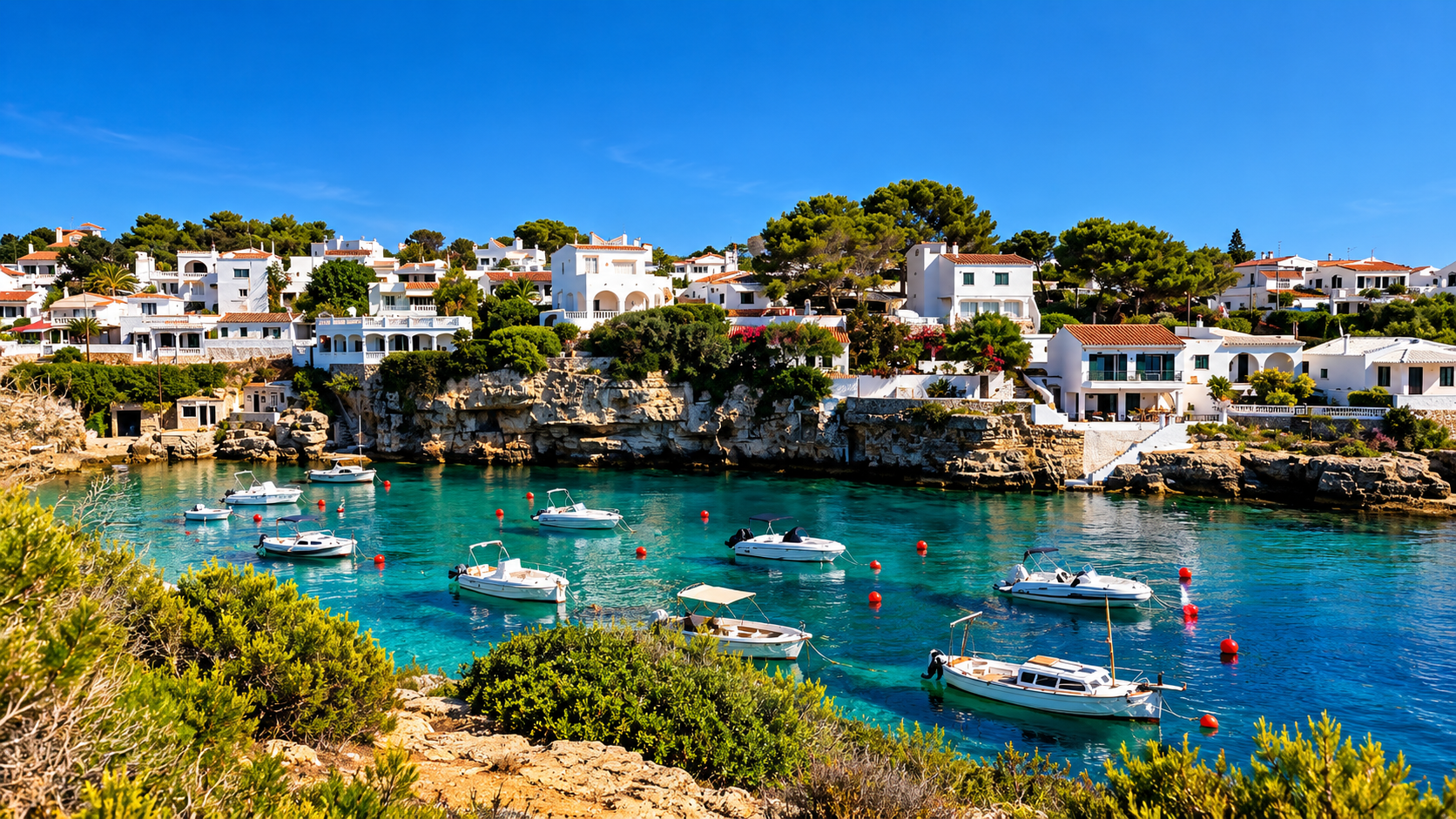
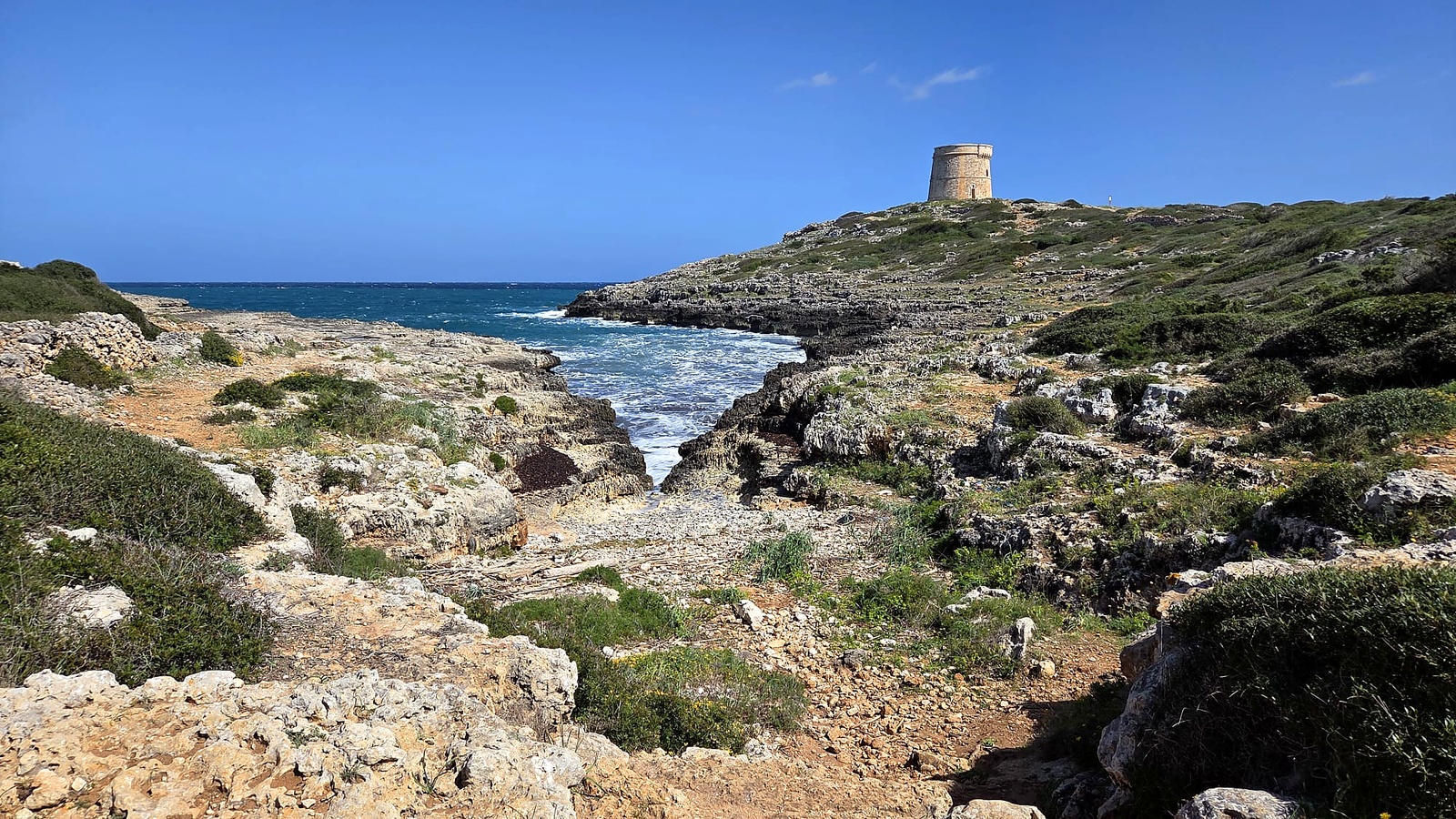
Menorca property ownership is shaped by strict planning laws, foreign buyer demand and increasing pressure to treat land as a long-term stewardship responsibility.
Menorca property ownership operates within a constrained system where land use is regulated more tightly than in most Mediterranean destinations.
Menorca is often described as protected, preserved or deliberately restrained. Behind those descriptions lies a more complex reality.
Property ownership in Menorca is less about who holds the title, and more about how property is permitted to be used. Planning law, rental regulation and environmental controls increasingly define the real limits of ownership.
Property on the island is not simply a private asset. This reflects wider structural pressures affecting housing availability and tourism demand across Menorca. It is a finite territorial resource shaped by planning law, environmental protection, tourism pressure, demographic change and competing claims of legitimacy.
To ask who really owns Menorca is not just a legal question. It is a question of who determines how land is used, who carries long-term responsibility for it, and who absorbs the costs of preserving it.
This analysis examines how Menorca’s ownership structure developed, how second homes and foreign buyers reshaped the market, and how policy is redefining ownership as a form of stewardship rather than entitlement. In this context, land stewardship refers to ownership that carries long‑term responsibility for environmental care, legal compliance and compatibility with the island’s capacity, rather than unrestricted development rights.
What is property ownership in Menorca?
Property ownership in Menorca operates within a highly regulated system where land use, environmental protection and planning restrictions define how property can be used rather than ownership rights alone.
Why property ownership in Menorca matters
Property ownership in Menorca matters because it determines how limited land resources are allocated between residents, second-home owners, tourism and investment. The balance between these uses directly affects affordability, environmental protection and long-term economic stability.
How Menorca’s property ownership structure was formed
Menorca’s current ownership model is not an accident of demand. It is the result of long-term policy restraint.
Unlike Mallorca or Ibiza, the island avoided large-scale resort urbanisation in the late twentieth century. This divergence became permanent with the phased introduction of the Insular Territorial Plan (PTI) from the early 2000s.
The PTI imposed strict limits on urban expansion, coastal development, infrastructure-led growth and rural land conversion. As a result, new development became the exception rather than the norm.
This decision embedded scarcity into the system long before international demand intensified. Today’s housing pressures are therefore not purely market-driven. They are structurally designed into the island’s planning framework.
Second homes in Menorca are a structural feature of the market
Second homes are often treated as a distortion. In Menorca, they are a core part of the system.
Data from the Observatori Socioambiental de Menorca (OBSAM) indicates that approximately 30 percent of the island’s housing stock, around 15,000 properties, is classified as second residence.
These properties are not evenly distributed. They tend to concentrate in coastal urbanisations, historic town centres and converted rural estates.
Their role is dual. On one hand, they support year-round economic activity through maintenance, renovation, local services and seasonal consumption. On the other, they concentrate occupancy into peak months, intensifying pressure on housing availability precisely when labour demand is highest.
The tension does not arise from ownership alone, but from under-utilisation within a system where supply cannot expand.
Foreign buyers in Menorca operate within, not outside, the system
Foreign ownership is often presented as the primary driver of housing pressure. The data suggests a more nuanced reality.
Across the Balearic Islands, foreign buyers account for more than 30% of property transactions, rising above 50 percent in higher-value segments. Menorca reflects this pattern, but with specific characteristics.
In Menorca, foreign buyers are estimated to account for roughly a quarter to a third of transactions, with a strong skew toward higher‑value rural and coastal properties rather than primary local housing stock.
Foreign purchasers are concentrated in premium and rural property markets. They rarely compete for entry-level housing and typically acquire existing stock rather than driving new development.
The dominant profiles remain Northern European, particularly German and British buyers, who are generally motivated by long-term use rather than short-term financial yield.
This means their impact is real, but structurally different from commonly assumed narratives, particularly those that treat foreign buyers as the primary driver of affordability pressure.
It is also important to note that foreign buyers are not a single category. They include long‑term residents, part‑time residents, retirees and families with deep local ties. Their presence shapes demand, but it does not function as a uniform or purely speculative force.
The real pressure comes from scarcity, not nationality
Framing the issue as local versus foreign ownership oversimplifies the dynamics at play.
Local buyers face increasing difficulty not because of nationality-based competition, but because supply is fixed. Price growth is driven by scarcity rather than by a single buyer group.
It is therefore accurate to describe Menorca’s property market as one of supply and demand. However, that relationship operates within a fixed territorial system. Demand can adjust quickly across tourism, investment and residential use, while supply cannot expand to match it. In such conditions, price growth and competition between uses are structural outcomes rather than signals of market failure.
Foreign buyers, for their part, operate under the same planning constraints and are increasingly exposed to regulatory uncertainty.
The core issue is not who is buying, but how many competing uses exist within a system that cannot expand. Primary residences, second homes, tourism accommodation and investment assets all draw from the same limited pool.
Why prices continue to rise under heavy regulation
Menorca’s rising property values are often viewed as contradictory given the island’s strict planning controls. In reality, those controls are a key driver of price growth.
By 2025–2026, the Balearic Islands had become Spain’s most expensive autonomous community, with average property prices exceeding €5,000 per square metre. Menorca has followed this trend despite a lower volume of transactions.
The underlying causes are structural. There is no mechanism for large-scale land release, permitting processes are slow, and new supply, particularly in affordable segments, is extremely limited. At the same time, demand remains strong, often supported by cash buyers operating in a constrained market.
This creates a pricing environment more comparable to restricted asset systems than to conventional housing markets.
This dynamic is explored further in Menorca’s housing crisis and how demand is reshaping the island.
Rural land reflects a shift from expansion to compliance
Over 80 percent of Menorca’s land is classified as rural, where development is either prohibited or tightly controlled.
Recent legalisation measures aimed at regularising historic irregularities have brought this issue into sharper focus. For some, these changes represent a weakening of long-standing environmental protections. For others, they are necessary to ensure legal clarity, safety and proper taxation.
What is clear is that rural ownership is no longer defined by expansion. It is increasingly defined by compliance, documentation and environmental accountability.
Ownership pressure varies significantly by location
Menorca does not experience uniform pressure across the island.
Ciutadella shows the highest concentration of second homes and foreign ownership, alongside rising prices in central areas. Maó presents a more balanced profile, supported by institutional employment and year-round activity.
Sant Lluís faces strong coastal demand, particularly in areas such as Binibèquer, while Es Mercadal and Es Migjorn are more exposed to rural land regulation issues. Ferreries and Alaior retain higher levels of local residency but are beginning to experience spillover demand.
This variation is critical. Any policy approach that treats the island as a single uniform market risks overlooking these localised dynamics.
Public perception reflects competing realities
The debate around ownership is shaped by three distinct perspectives.
Local residents tend to focus on affordability, access and long-term continuity, with increasing concern about seasonal under-use of housing.
From mainland Spain, Menorca is often viewed symbolically, as an example of foreign ownership pressure, rather than as part of a broader structural housing issue.
Foreign buyers themselves are becoming more cautious, prioritising legal certainty and adapting their behaviour in response to regulatory signals.
These perspectives are often combined into a single narrative, but in reality they operate independently and respond to different incentives.
Restrictions are shifting from ownership to behaviour
Despite political discussion, broad restrictions on foreign ownership are not realistically viable within EU free movement frameworks.
The direction of policy is instead focused on how property is used. This includes tighter control of tourist rentals, increased scrutiny of vacant properties and a closer link between ownership and environmental or infrastructure impact.
Ownership itself remains legal. The conditions attached to it are becoming more demanding.
The next phase of regulation is already visible
Current policy signals point towards a more controlled system rather than an expanded one.
Tourist rental licences remain tightly restricted, enforcement against illegal use is increasing and fiscal pressure on under-occupied properties is likely to grow. At the same time, there are ongoing efforts to encourage long-term rental availability and align property use with infrastructure capacity.
These changes sit within the broader framework outlined in the Balearic Islands tourism strategy for 2030.
Ownership is becoming conditional
For residents, the focus is shifting towards availability and practical access to housing.
For buyers, compliance, legality and intended use are becoming more important than speculative value.
For investors, short-term yield models are weakening, with long-term value increasingly tied to well-managed, regulation-compliant property. These shifts in ownership behaviour increasingly intersect with workforce stability, as housing use patterns directly affect the island’s ability to sustain year‑round employment and service capacity.
Ownership without alignment to local systems is becoming more fragile over time.
What defines the ownership system
- Menorca property ownership is defined by planning restrictions and limited supply
- Second homes are a structural part of the housing system, not an anomaly
- Foreign buyers operate within existing constraints rather than driving expansion
- Rising prices are driven by scarcity rather than nationality-based demand
- Policy is shifting from ownership rights to usage and compliance
Menorca’s property market functions as a regulated territorial system
Taken together, Menorca’s property system functions less like a conventional housing market and more like a regulated territorial framework. Ownership remains possible and legally protected, but its expression is increasingly shaped by planning limits, environmental accountability and usage controls designed to protect long-term island resilience.
The central question for Menorca’s future
Menorca is not facing a choice between tourism and preservation. It is facing a question of balance.
The island must continue to generate income while maintaining affordability, protecting its environment and supporting a stable year-round population. This requires active management rather than passive growth.
This challenge is closely connected to wider economic pressures explored in how tourism shapes Menorca’s economy and daily life.
Property ownership in Menorca is shifting from a purely private right to a regulated role within a tightly controlled territorial system.
Common questions about property ownership in Menorca
Can foreigners buy property in Menorca?
Yes. Foreign buyers can purchase property without restriction, although they must comply with Spanish legal and tax requirements.
Do second homes affect housing availability in Menorca?
Yes. Second homes reduce the proportion of housing used as primary residence, particularly in peak-season areas.
Why is property expensive in Menorca?
Prices are driven by limited supply, strict planning controls and sustained demand within a constrained market.
Is Menorca restricting property ownership?
Ownership itself is not being restricted, but regulations are increasingly focused on how properties are used.
Does owning property in Menorca give unlimited usage rights?
No. While ownership is legally protected, how property can be used is increasingly defined by planning law, environmental regulation and rental controls.