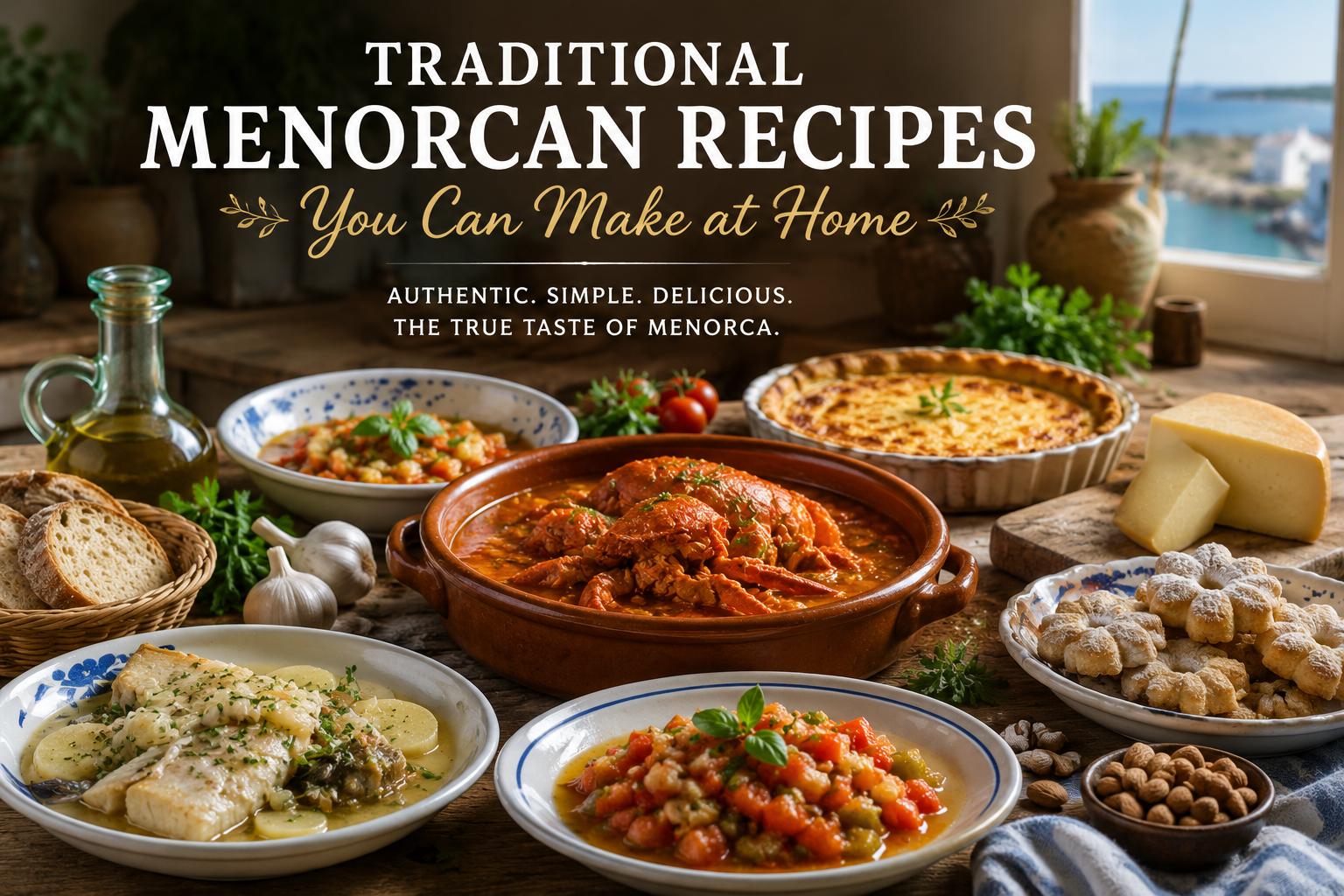
Every destination has dishes that appear on restaurant menus for visitors, but the meals that truly define a place are usually found around family dining tables.
In Menorca, recipes are rarely complicated. They rely on fresh seasonal ingredients, careful preparation and an understanding that good food doesn’t need unnecessary embellishment. The island’s cuisine has always reflected its landscape. Fishermen brought home the day’s catch, farmers harvested vegetables from fertile fields divided by dry-stone walls, shepherds and dairy farmers produced exceptional cheese, while olive oil, garlic and herbs tied everything together.
Many of these recipes have been passed from one generation to the next for hundreds of years. Some originated in humble farm kitchens where every ingredient had to be used wisely. Others were created by fishing communities making the most of the Mediterranean’s remarkable seafood.
Today, these traditional dishes remain an important part of everyday life. While modern restaurants often reinterpret Menorcan classics, the recipes themselves have changed surprisingly little. Their appeal lies in their honesty. Fresh ingredients remain the focus, while simple cooking techniques allow each flavour to speak for itself.
Whether you are planning a Menorcan-themed dinner at home or simply want to experience the island beyond its beaches, these recipes offer a genuine taste of Menorca.
Why Menorcan Food Is Perfect for Home Cooking
One of the reasons Menorcan cuisine has endured is its accessibility.
Unlike some regional cuisines that require specialist equipment or difficult-to-find ingredients, most traditional Menorcan recipes can be recreated almost anywhere. Good olive oil, seasonal vegetables, fresh herbs, quality seafood and carefully selected meats form the foundation of many dishes.
The cooking itself reflects Mediterranean common sense.
Vegetables are cooked slowly rather than aggressively.
Fresh herbs enhance rather than dominate.
Cheese is used thoughtfully.
The natural sweetness of tomatoes, onions and peppers is developed through patience rather than heavy seasoning.
The result is food that feels both comforting and elegant.
It is equally suited to a quiet family meal or a table filled with friends.

Caldereta de Langosta
No dish represents Menorca more completely than Caldereta de Langosta.
Originally prepared by fishermen in the sheltered harbour of Fornells, this lobster stew has become one of Spain’s most celebrated seafood dishes. Despite its reputation, authentic Caldereta remains surprisingly simple. The secret lies not in complicated techniques but in the quality of the ingredients.
Ingredients
- 2 kg Mediterranean spiny lobster (or the freshest lobster available)
- 2 large onions
- 5 ripe tomatoes
- 2 green peppers
- 5 garlic cloves
- Extra virgin olive oil
- 1 litre light fish stock
- 2 slices rustic bread
- Fresh parsley
- Bay leaves
- Sea salt
- Black pepper
Method
Cook the onions gently in olive oil until soft without allowing them to brown.
Add the garlic followed by the peppers.
Stir in grated tomatoes and allow them to reduce slowly into a rich sofrito.
Toast the bread before blending it with a little stock until smooth.
Add the remaining stock together with the bread mixture and bay leaves.
Simmer gently before adding the lobster pieces for the final eight to ten minutes.
Finish with chopped parsley and serve immediately with rustic country bread.
Serving Suggestion
A chilled Menorcan white wine and plenty of crusty bread complete the experience.
For a detailed history and expert guide, see our article on Caldereta de Langosta: The Complete Guide.

Oli-aigua
Few recipes demonstrate Menorca’s culinary philosophy better than Oli-aigua.
Translated literally as “oil and water”, it is a humble vegetable soup that originated among farming families who needed nourishing meals from simple ingredients.
Despite its modest appearance, Oli-aigua remains one of the island’s most beloved comfort foods.
Ingredients
- 4 ripe tomatoes
- 2 onions
- 2 green peppers
- 4 garlic cloves
- Extra virgin olive oil
- Water or light vegetable stock
- Fresh basil
- Sea salt
- Black pepper
Method
Cook the onions slowly in olive oil until soft.
Add garlic and peppers.
Stir in grated tomatoes and cook until thickened.
Add water and simmer gently for around thirty minutes.
Season to taste before adding torn basil leaves immediately before serving.
Local Tip
Many Menorcans serve Oli-aigua with slices of toasted bread or even fresh figs during late summer, creating a wonderful contrast between savoury and sweet.

Berenjenas Rellenas a la Menorquina
Stuffed aubergines are one of the island’s best-loved family dishes.
Unlike heavier stuffed vegetable recipes found elsewhere in Spain, the Menorcan version balances vegetables, meat and cheese without becoming overly rich.
Ingredients
- 2 large aubergines
- 300 g minced beef or pork
- 1 onion
- 2 garlic cloves
- 3 tomatoes
- Mahón-Menorca cheese
- Olive oil
- Breadcrumbs
- Fresh parsley
Method
Halve the aubergines and roast until tender.
Remove the flesh carefully.
Prepare a sofrito using onion, garlic and tomatoes before adding the minced meat.
Mix with the chopped aubergine flesh.
Refill the shells.
Top generously with grated Mahón-Menorca cheese and breadcrumbs.
Bake until golden.
Why It Matters
This dish reflects Menorca’s farming traditions, where vegetables from the garden and locally produced cheese formed the basis of everyday meals.

Arroz de la Tierra
Despite its name, “rice from the land” contains no rice at all.
Instead, it uses crushed wheat, creating one of Menorca’s most distinctive recipes.
The dish dates back centuries and was particularly popular among farming communities because wheat was more readily available than imported rice.
Ingredients
- 400 g crushed wheat
- Pork shoulder
- Pork liver
- Sobrasada
- Onion
- Garlic
- Olive oil
- Paprika
- Cinnamon
- Chicken stock
Method
Brown the pork before cooking onions and garlic gently.
Add the spices.
Stir in the crushed wheat before gradually adding stock.
Finish by folding through cooked liver and small pieces of sobrasada.
Bake until the wheat becomes tender.
Flavour Profile
Rich, earthy and deeply comforting, Arroz de la Tierra is one of Menorca’s most distinctive winter dishes.

Perol Menorquín
Perol Menorquín demonstrates how effectively Menorcans combine seafood and vegetables.
Prepared in an earthenware casserole, this traditional recipe varies between households, but fresh fish always remains the focus.
Ingredients
- White fish such as monkfish or hake
- Potatoes
- Tomatoes
- Onion
- Garlic
- Olive oil
- Fish stock
- Parsley
Method
Layer sliced potatoes inside a casserole.
Top with sofrito before adding pieces of fish.
Pour over fish stock and bake gently until the potatoes become tender and the fish flakes easily.
The broth should remain light and intensely flavoured.
Serving Suggestion
Serve with fresh bread to enjoy every spoonful of the broth.

Mahón-Menorca Cheese Tart
One of the simplest ways to enjoy the island’s famous cheese is in a savoury tart.
Young or semi-cured Mahón-Menorca melts beautifully while retaining its distinctive buttery flavour.
Ingredients
- Shortcrust pastry
- 250 g grated Mahón-Menorca cheese
- 3 eggs
- 200 ml cream
- Fresh thyme
- Black pepper
Method
Line a tart tin with pastry.
Whisk eggs with cream before folding through grated cheese.
Season lightly.
Bake until the filling is golden and just set.
Serve warm with a lightly dressed salad.
Cocas Menorquinas
Throughout Menorca, cocas appear in bakeries, village festivals and family kitchens.
They resemble flatbreads topped with seasonal ingredients and are ideal for sharing.
Unlike pizza, the dough is lighter and the toppings are allowed to remain simple.
Popular combinations include roasted peppers, tomatoes, onions, courgettes, anchovies and Mahón-Menorca cheese.
Every village has its own variations, reflecting the ingredients available throughout the year.
Sobrasada a la Menorquina
Although sobrasada is often associated with Mallorca, Menorca has its own long tradition of producing this soft, paprika-seasoned cured sausage. Menorcan sobrasada tends to be milder and more delicately seasoned, allowing the quality of the pork to shine through.
While it is delicious spread simply on fresh bread, local families also cook with it, using its rich flavour to enhance stews, vegetables and pasta dishes.
Ingredients
- 150 g Menorcan sobrasada
- Rustic bread
- Honey (optional)
- Mahón-Menorca cheese (optional)
Method
Slice thick pieces of country bread and toast until lightly crisp.
Spread generously with sobrasada while the bread is still warm.
For a more indulgent version, add thin slices of semi-cured Mahón-Menorca cheese and place briefly under the grill until melted.
Finish with a drizzle of local honey if you enjoy the traditional sweet and savoury combination.
Local Tip
This simple tapa is often served with a glass of Gin de Mahón or a young Menorcan red wine and makes an excellent appetiser before a larger meal.
Raya al Horno (Baked Skate)
For generations, Menorcan fishing families made full use of whatever the sea provided. Skate may not be the most glamorous fish, but its firm texture and mild flavour make it ideal for baking.
This recipe remains popular in homes across the island, particularly during spring and autumn when fresh skate is readily available.
Ingredients
- 1 kg skate wings
- 500 g potatoes
- 2 onions
- 3 tomatoes
- 4 garlic cloves
- Extra virgin olive oil
- Fresh parsley
- Lemon
- Sea salt
- Black pepper
Method
Slice the potatoes and onions before layering them in a baking dish.
Add chopped tomatoes and garlic, drizzle generously with olive oil and roast for around 30 minutes.
Place the skate on top of the vegetables, season well and return to the oven for a further 20 minutes.
Finish with chopped parsley and fresh lemon juice before serving.
Serving Suggestion
Serve with a green salad and crusty bread to soak up the fragrant cooking juices.
Fideus de la Mar
Before rice became commonplace, pasta featured heavily in many Menorcan seafood dishes.
Fideus de la Mar is one of the island’s simplest yet most satisfying recipes, combining short pasta with fresh shellfish and fish in a rich Mediterranean broth.
Ingredients
- 300 g short fideuà pasta or broken vermicelli
- Mixed seafood such as prawns, mussels and squid
- 1 onion
- 2 garlic cloves
- 3 ripe tomatoes
- Fish stock
- Olive oil
- Sweet paprika
- Fresh parsley
Method
Prepare a sofrito with onion, garlic and tomatoes.
Add the seafood briefly before stirring through the pasta.
Pour in hot fish stock and simmer until the pasta has absorbed most of the liquid.
Scatter over chopped parsley before serving immediately.
Why It Works
The pasta absorbs the seafood broth beautifully, creating a dish that is lighter than paella while still delivering rich Mediterranean flavours.
Escarola amb Magrana
Not every traditional Menorcan dish is hearty.
This refreshing salad combines bitter leaves with sweet pomegranate, olive oil and local cheese, reflecting the island’s abundance of fresh seasonal produce.
Ingredients
- Curly endive
- Pomegranate seeds
- Mahón-Menorca cheese
- Toasted almonds
- Extra virgin olive oil
- White wine vinegar
- Sea salt
Method
Wash and dry the endive thoroughly.
Scatter over the pomegranate seeds, shaved cheese and toasted almonds.
Dress lightly with olive oil, vinegar and sea salt immediately before serving.
Seasonal Tradition
This salad is particularly popular during autumn when pomegranates are harvested across the island.
Greixera de Brossat
One of Menorca’s most traditional desserts, Greixera de Brossat is a baked cheesecake made using fresh curd cheese known locally as brossat.
Unlike many modern cheesecakes, it has a light texture and delicate flavour, allowing the quality of the dairy ingredients to take centre stage.
Ingredients
- 500 g fresh ricotta or brossat
- 4 eggs
- 150 g sugar
- Lemon zest
- Cinnamon
- Vanilla extract
Method
Whisk the eggs and sugar until light.
Fold in the curd cheese together with the lemon zest, cinnamon and vanilla.
Pour into a greased baking dish and bake until lightly golden with just a slight wobble in the centre.
Allow to cool completely before serving.
Serving Suggestion
Serve chilled with fresh figs, strawberries or a drizzle of local honey.

Pastissets
These flower-shaped biscuits are among Menorca’s most recognisable sweet treats.
Traditionally prepared for family celebrations, religious festivals and Christmas, they have become a year-round favourite in local bakeries.
Ingredients
- Plain flour
- Butter or lard
- Sugar
- Egg yolks
- Lemon zest
- Cinnamon
- Icing sugar
Method
Combine the ingredients to form a smooth dough.
Roll out evenly before cutting into traditional flower shapes.
Bake until pale golden, taking care not to overcolour them.
Dust generously with icing sugar once cooled.
Local Tip
Pastissets are traditionally enjoyed with coffee in the afternoon or alongside a small glass of sweet liqueur after dinner.
Carquinyols
These twice-baked almond biscuits are wonderfully crisp and keep for weeks, making them one of Menorca’s favourite homemade treats.
Ingredients
- Plain flour
- Eggs
- Sugar
- Whole almonds
- Lemon zest
- Baking powder
Method
Mix the ingredients into a firm dough before shaping into long logs.
Bake until lightly coloured, then slice diagonally while still warm.
Return the slices to the oven until crisp on both sides.
Perfect Pairing
Carquinyols are excellent served with coffee, dessert wine or even a small glass of Gin de Mahón.
Tips for Cooking Menorcan Food at Home
Authentic Menorcan cooking is less about following recipes precisely and more about respecting good ingredients.
To recreate the island’s flavours, keep these principles in mind:
- Use the best extra virgin olive oil you can find.
- Allow onions and tomatoes to cook slowly into a proper sofrito rather than rushing the process.
- Choose seasonal vegetables whenever possible.
- Fresh herbs such as parsley, thyme and basil are preferred over dried alternatives.
- Avoid over-seasoning. Menorcan cuisine celebrates natural flavours rather than masking them.
- If Mahón-Menorca cheese is unavailable, choose a high-quality semi-hard cow’s milk cheese with a nutty flavour, although nothing truly replaces the original PDO cheese.
Common Questions About Traditional Menorcan Recipes
What is the most famous traditional dish in Menorca?
Caldereta de Langosta, a rich lobster stew originating in Fornells, is widely regarded as Menorca’s signature dish and one of Spain’s finest seafood recipes.
Is Menorcan food spicy?
No. Traditional Menorcan cuisine is generally mild, relying on olive oil, garlic, herbs and fresh ingredients rather than hot spices.
Can I make Menorcan recipes outside Spain?
Yes. Most recipes use readily available ingredients. While authentic Mahón-Menorca cheese and local sobrasada add authenticity, suitable alternatives allow you to recreate many traditional dishes at home.
What ingredients define Menorcan cuisine?
Olive oil, tomatoes, garlic, onions, peppers, fresh seafood, pork, lamb, Mahón-Menorca cheese, almonds, herbs and seasonal vegetables are among the ingredients that appear most frequently in traditional recipes.
Which Menorcan recipe is easiest for beginners?
Oli-aigua is an excellent starting point. It requires only a handful of ingredients and perfectly captures the island’s philosophy of simple, honest cooking.
Bringing the Flavours of Menorca into Your Kitchen
The beauty of Menorcan cuisine lies in its authenticity. These recipes were never created to impress critics or follow culinary trends. They evolved naturally from island life, shaped by fishermen, farmers and families who understood that exceptional food begins with exceptional ingredients.
Preparing these dishes at home is about more than following a recipe. It is an opportunity to experience a small part of Menorca’s culture, whether that means slowly building the rich flavours of a traditional sofrito, baking a tray of flower-shaped pastissets, or gathering family and friends around a steaming pot of Caldereta de Langosta.
Each recipe tells a story of the island’s history, its landscape and its people. Together, they offer a delicious introduction to one of the Mediterranean’s most distinctive culinary traditions, proving that the true taste of Menorca can be enjoyed long after you’ve returned home.