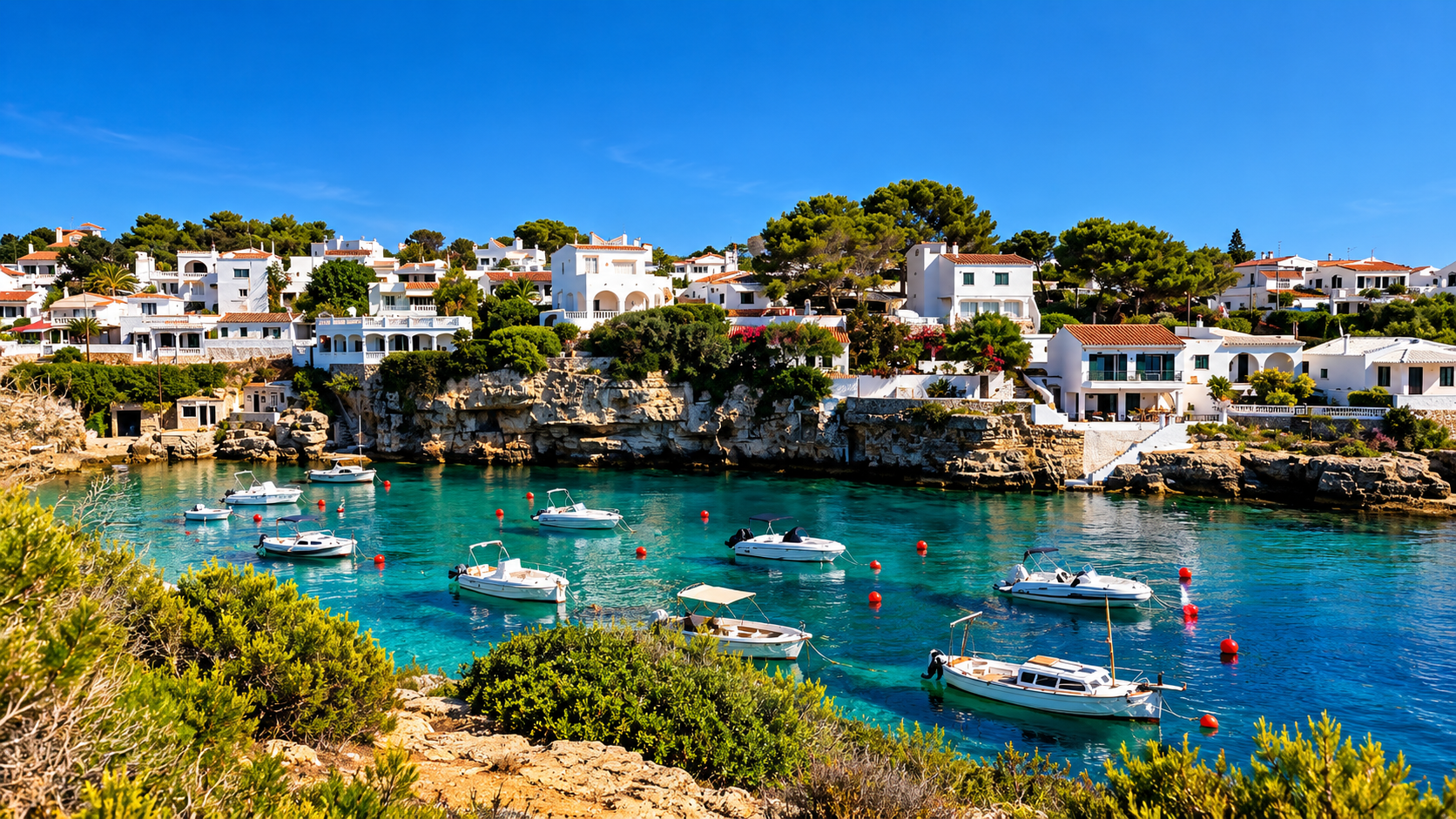
This Menorca guide 2026 explains everything you need to know about visiting the island, including beaches, where to stay, transport and the best time to go. Menorca is one of the most distinctive islands in the Mediterranean. Known for its protected coastline, historic towns and slower pace of life, it offers a different experience from many more developed destinations.
As a UNESCO Biosphere Reserve, the island combines natural landscapes, cultural heritage and a more measured approach to tourism. Understanding how Menorca works is key to experiencing it properly.
Menorca guide: what is Menorca?
MenMenorca is Spain’s easternmost Balearic island, located in the Mediterranean Sea. It is known for its mix of turquoise coves, rural landscapes and historic settlements, as well as its relatively low-density development compared with other island destinations.
The island has a strong environmental identity, shaped by planning controls and its UNESCO Biosphere Reserve status.
Menorca at a glance
- Location: Balearic Islands, Spain
- Main towns: Maó (Mahón) and Ciutadella
- Length: approximately 50 km
- UNESCO status: Biosphere Reserve since 1993
- Coastline: highly varied, with sheltered southern beaches and a rugged northern coast
Why visit Menorca?
Menorca appeals to visitors looking for beaches, nature and a more balanced Mediterranean experience. Unlike more heavily developed destinations, it combines environmental protection, lower visitor density and a stronger connection between landscape and daily life.
The result is an island that feels quieter, more structured and less driven by volume tourism.
What are the best beaches in Menorca?
Menorca is widely considered to have some of the most beautiful beaches in the Mediterranean. The island’s coastline contains more than 200 beaches and coves, ranging from long sandy bays to small hidden calas reached only by coastal paths.
Many of the most famous beaches are found along the south coast, where limestone cliffs and pine forests surround calm turquoise coves. Beaches such as Cala Macarella, Cala Turqueta and Cala Mitjana represent the classic image of Menorca’s coastline.
The north coast offers a very different landscape. Here the coastline becomes more rugged and windswept, with darker sand, striking rock formations and fewer sheltered bays. Beaches such as Cala Pregonda and Cala Pilar reveal a wilder side of the island that contrasts sharply with the calm southern coves.
To explore the island’s beaches in detail, see our complete guide to the best beaches in Menorca, which explains where to go, what to expect and how different areas of the coastline compare.
Why Menorca feels different
What sets Menorca apart is not only its beaches, but how the island is managed.
Strict planning regulations limit development, while its Biosphere Reserve status reinforces environmental protection. This creates a different rhythm, where tourism, countryside and coastal areas remain closely connected.
This balance is a defining feature of the island.
Where should you stay in Menorca?
Where to stay in Menorca depends on whether you want a historic town, beach access, rural quiet or a practical base.
- Ciutadella – historic atmosphere and access to south coast beaches
- Maó (Mahón) – working harbour town and transport hub
- Cala Galdana – family-friendly resort with easy beach access
- Son Bou – long sandy beach and open space
- Sant Lluís / Es Castell – quieter areas with a more local feel
Each area offers a different experience, so location plays a key role in shaping your stay. Understanding these differences is key to choosing the right base. For a detailed breakdown of areas, see our guide to where to stay in Menorca.
Do you need a car in Menorca?
Yes, in most cases a car is the best way to get around Menorca.
Public buses connect the main towns and some beaches, but many of the island’s most interesting areas, including smaller coves and rural landscapes, are difficult to reach without a vehicle.
Car hire remains the most flexible option for exploring the island fully
Transport is an important part of planning a visit, particularly if you want to explore beyond the main towns. For a full breakdown of options, see our guide to getting around Menorca.
Getting around Menorca
- Car hire – most flexible option
- Public buses – reliable between towns, limited elsewhere
- Taxis – available but in high demand during summer
- Walking and cycling – suitable for local areas and coastal routes
Is Menorca expensive to visit?
Menorca is generally considered more affordable than Ibiza and Mallorca, although prices can vary significantly depending on the season and location.
Accommodation costs increase during peak summer months, particularly in popular coastal areas. Dining ranges from simple local restaurants to higher-end options, with prices reflecting location and demand.
Car hire, transport and activities also fluctuate depending on the time of year. Visiting outside peak season often provides better value and a quieter experience.
Understanding realistic costs is important when planning a trip or considering a longer stay. For a detailed breakdown, see our guide to how expensive Menorca is.
When to Visit Menorca
The best time to visit Menorca depends on what you are looking for from the island.
Summer offers the warmest weather and best conditions for swimming, but also brings higher visitor numbers and increased prices. Spring and autumn provide a quieter experience, with milder temperatures that are ideal for exploring and walking.
Winter is significantly quieter, with fewer services available, but offers a different perspective of the island and a more local atmosphere.
Seasonality plays an important role in how Menorca feels and functions. For a detailed month-by-month breakdown, see our guide to the best time to visit Menorca.
What makes Menorca’s landscape unique?
Menorca’s landscape is shaped by contrast.
The south coast is defined by white sand beaches, pine forests and sheltered coves, while the north is more rugged, with red rock formations, stronger winds and a more exposed coastline.
Inland, the island is largely rural, with farmland, dry-stone walls and small villages forming a continuous landscape..
Environmental factors are also becoming more important to how the island is managed, particularly in relation to Menorca climate change and long-term sustainability.
What this means for visitors
Menorca rewards planning and understanding.
The island is not designed for rapid movement or high-density tourism. Instead, it offers a more structured and balanced experience, where location, timing and expectations all shape how you experience it.
Visitors who adapt to this tend to get the most out of the island. This Menorca guide is designed to give a clear overview of how the island works, not just what to see.
Common questions about Menorca
Is Menorca a good place to visit?
Yes. Menorca is well suited to visitors looking for beaches, nature and a quieter Mediterranean experience with less development than many comparable destinations.
Do you need a car in Menorca?
Yes. In most cases, a car is the most practical way to explore the island, particularly for reaching beaches and rural areas.
When is the best time to visit Menorca?
For most travellers, May, June and September offer the best balance of weather, access and crowd levels.
Are Menorca beaches free?
Yes. All beaches in Menorca are public and free to access, although parking restrictions and access limits may apply in peak season.
Final perspective
Menorca is not defined by a single feature, but by how its elements work together.
Its beaches, towns, landscapes and policies all reflect a broader approach based on restraint, protection and balance. This creates a destination that feels different not because it lacks attractions, but because it manages them differently.
Understanding that difference is key to understanding the island itself.