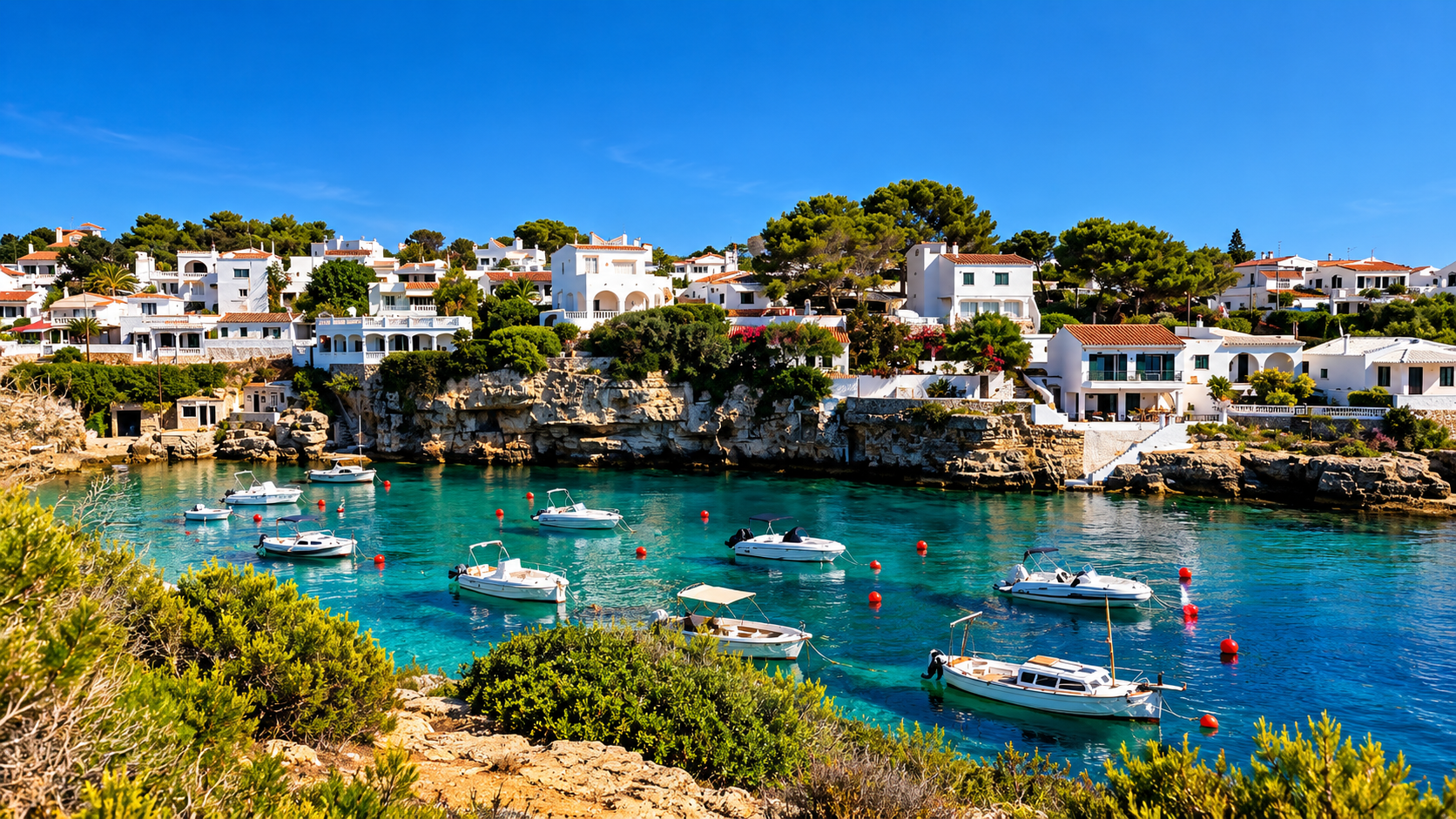
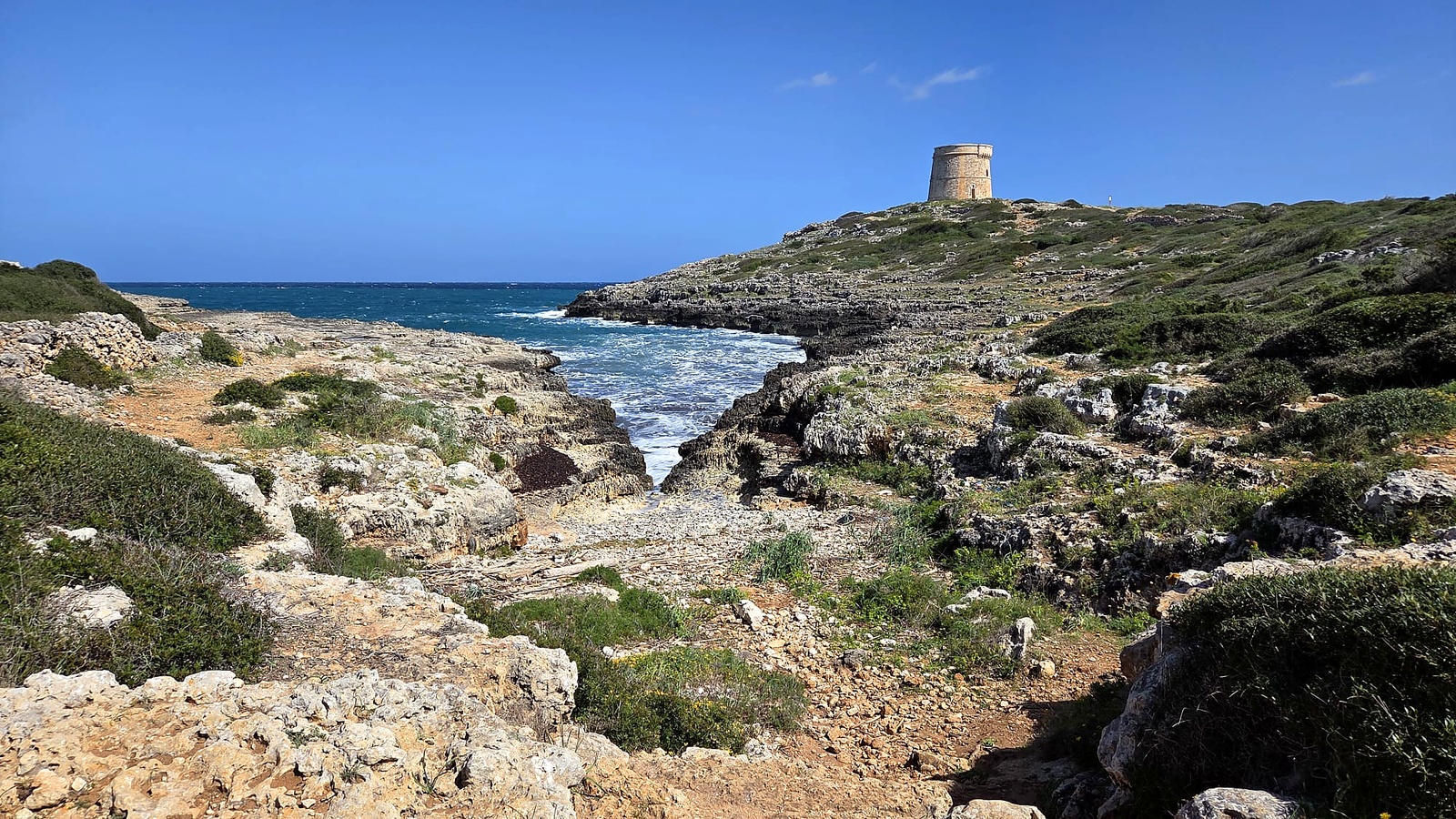
Menorca often feels different from other Mediterranean destinations, but the reason is not always immediately clear.
It is not simply quieter or smaller. What sets the island apart is a combination of restraint, rhythm and balance that shapes how it is experienced over time.
This difference is subtle at first, but it becomes more noticeable the longer you stay.
It is not just quieter, it is organised differently
Many people describe Menorca as quiet, but that description does not fully explain what is happening.
The island is not empty, and it is not lacking in things to do. Instead, it is organised in a way that avoids the constant pressure found in more crowded destinations. There are fewer places designed purely to capture attention, and fewer environments built around intensity as a selling point.
This creates a different kind of experience. You are not being pulled in multiple directions at once. Movement feels simpler, and time feels less fragmented.
The rhythm of the island changes how you experience it
In many destinations, the pace is uneven. Some areas feel slow, others feel overwhelming, and the experience depends heavily on where you happen to be.
Menorca is more consistent.
There is a natural flow to the day that becomes clearer over time. Mornings are often active, shaped by movement towards the coast. The middle of the day slows down, particularly in warmer months. Evenings build gradually rather than suddenly, centred around towns, restaurants and quieter social spaces.
Nothing feels forced. The island does not try to accelerate your experience, and that changes how time is used.
Restraint is one of Menorca’s defining characteristics
One of the least obvious aspects of Menorca is how much it avoids.
It avoids overdevelopment in many coastal areas. It avoids creating dense, high-pressure zones that dominate the rest of the island. It avoids building an identity purely around nightlife or short-term tourism energy.
This restraint is not something most visitors notice immediately, but it shapes everything. It affects how far you can see, how crowded places feel, and how long the environment remains enjoyable.
Over time, this becomes one of the island’s strongest qualities.
The island rewards attention rather than speed
Menorca does not reveal itself quickly.
If you try to move through it at pace, the experience can feel flatter than expected. Beaches begin to feel similar, towns appear interchangeable, and the island can seem simpler than it really is.
The experience changes when you slow down.
Differences between areas become clearer. The variation between coastlines becomes more apparent. The relationship between geography and atmosphere starts to make sense.
This is often the point where opinions shift, and where the island begins to feel more distinctive. This is also why time matters more than many people expect, as explained in how many days you need in Menorca.
Geography shapes more than most people realise
Menorca is not large, but it is not uniform.
The north and south of the island feel different, not only in terms of landscape but in how they are experienced. The east and west have their own character, and inland areas introduce another layer entirely.
These differences influence everything from beach conditions to wind exposure to the general atmosphere of a place.
Without noticing it consciously, visitors adjust their behaviour based on these patterns. A clearer understanding of how the island is structured can be found in where to stay in Menorca.
Tourism exists, but it does not define everything
Menorca is clearly a tourism destination, but it does not feel entirely shaped by tourism.
There is still a functioning local environment beneath the seasonal layer. Towns operate with a sense of continuity, and there is less of a feeling that everything exists purely for visitors.
This balance changes how places feel. It makes the island easier to trust, and less exhausting to move through over time.
This balance is becoming even more important as the island responds to long-term environmental changes, including those explored in Menorca climate change and its future impact.
Why some people struggle to connect with Menorca
Not everyone responds to this kind of environment.
For some visitors, Menorca can feel too understated. It does not present itself in obvious ways, and it does not try to impress quickly. If someone is expecting constant stimulation or a dense list of standout attractions, the island can feel limited.
This is not a flaw so much as a difference in expectation. This is explored more directly in is Menorca too quiet.
Why others return repeatedly
For others, the same qualities have the opposite effect.
Once expectations adjust, Menorca becomes easier to understand. The experience becomes more predictable in a positive way, and the island begins to feel more reliable.
People start to refine how they use it. They return to specific areas, repeat certain patterns, and build familiarity with how the island works.
At that point, Menorca often shifts from a one-time destination to something more consistent.
The difference is subtle, but it shapes everything
Menorca does not rely on immediate impact.
Its strengths are not always visible on arrival, and they are not designed to overwhelm. Instead, they build gradually through the experience itself.
Ease of movement, clarity of space, and the absence of constant pressure combine to create something that is difficult to replicate elsewhere.
A different kind of value
The value of Menorca is not only in what it offers, but in what it avoids.
It avoids the friction that makes other destinations tiring. It avoids the intensity that shortens enjoyment. It avoids the need to constantly seek the next thing.
That absence of pressure is what many people are responding to, even if they do not describe it in those terms.
Common questions about why Menorca feels different
Why does Menorca feel quieter than other islands?
Because it is structured differently, with less emphasis on nightlife and high-density tourism.
Is Menorca less developed than Mallorca?
In many areas, yes. Development is more controlled and less concentrated.
Does Menorca feel too slow?
For some travellers it does, particularly if they are used to more high-energy destinations. For others, that slower pace is the main reason they choose the island.