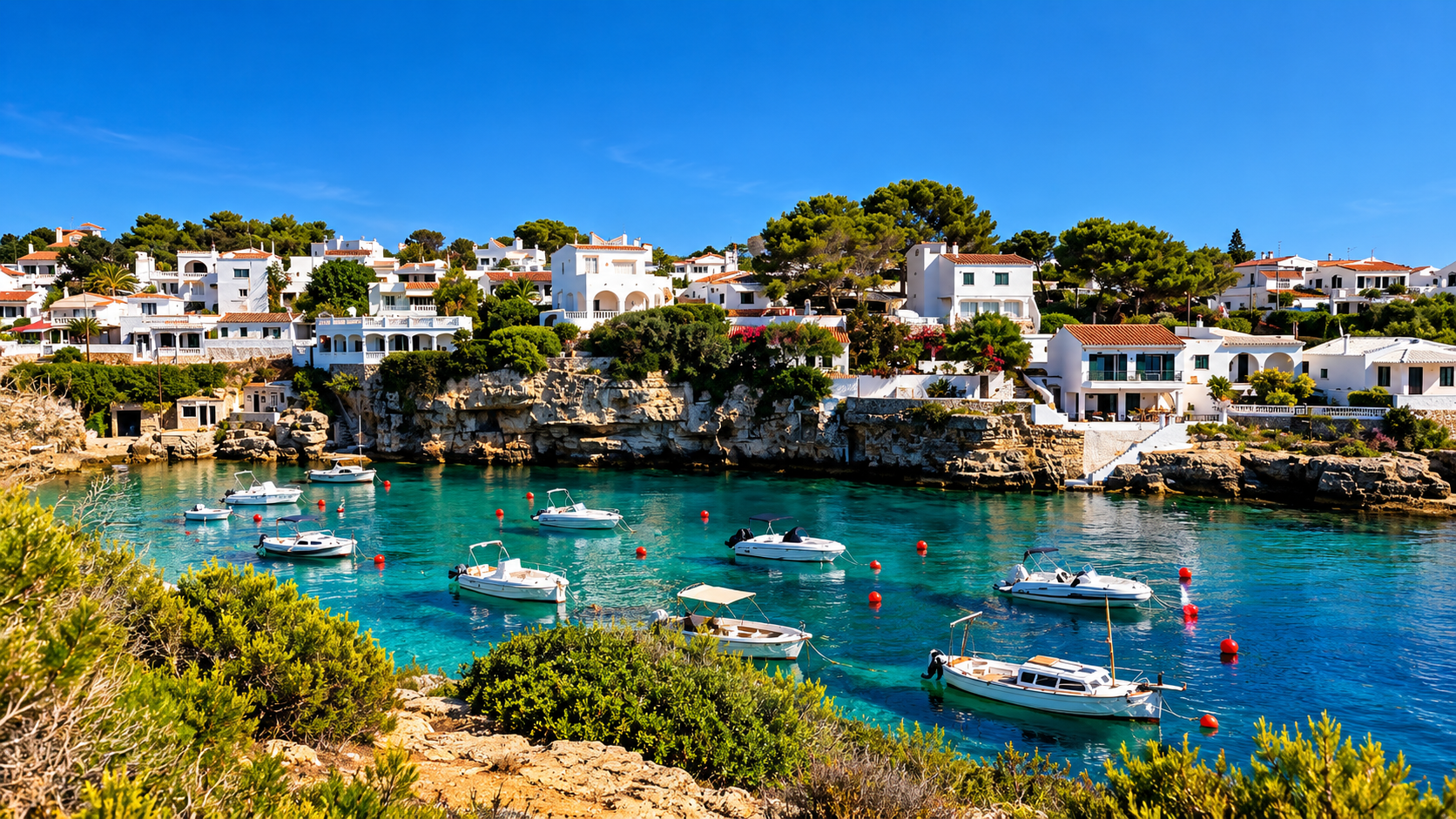
Menorca had direct flights to 74 destinations during summer 2026. From November, that network is scheduled to shrink to just five: Palma de Mallorca, Barcelona, Madrid, Valencia and London Gatwick. It is the island’s smallest winter route network in recent years, despite record traffic in 2025 and another exceptionally busy summer in 2026.
The contrast is particularly striking when examining the airport’s traffic. In August 2026, Menorca Airport handled 765,701 passengers, compared with just 82,872 in January. That difference helps explain why airlines concentrate their services into the warmer months, but it does not fully explain the difficulties faced by residents, businesses and property owners who need reliable connections throughout the year.
For winter 2026/27, the situation is mixed. Madrid is gaining a third daily return service, while Palma, Barcelona and Valencia face reductions. London retains its twice-weekly connection, but Bilbao disappears from the regular low-season timetable. Understanding these changes provides a useful insight into how Menorca’s transport system operates and why the island’s international popularity does not automatically translate into year-round accessibility.
Quick Answers: Menorca Winter Flights 2026/27
| Question | Answer |
|---|---|
| Can you fly to Menorca in winter? | Yes. Menorca Airport operates throughout the year, although direct routes and frequencies are considerably reduced. |
| Which destinations have direct winter flights? | Palma de Mallorca, Barcelona, Madrid, Valencia and London Gatwick. |
| Are there direct flights from the UK? | Yes. easyJet is scheduled to operate London Gatwick flights on Wednesdays and Saturdays. |
| How many flights operate between Menorca and Madrid? | Three return services daily from November 2026 under the revised public service obligation. |
| Which airport has the most connections with Menorca? | Palma de Mallorca, with approximately 71 weekly departures in a representative December schedule. |
| Are there direct flights to Barcelona throughout winter? | Yes. Vueling maintains the route, although frequencies are lower than last year. |
| What happened to the Bilbao flights? | Vueling is suspending its winter service after 24 October 2026, with flights scheduled to resume on 19 March 2027. |
| Can you reach Menorca from other European cities? | Yes, usually by connecting through Barcelona, Madrid or Palma. |
| Do Menorca residents receive discounted flights? | Eligible residents can receive a 75% discount on qualifying domestic air fares. |
| Are ferries available during winter? | Yes. Connections with Mallorca and mainland Spain continue, although timetables vary. |
| Can flight schedules change? | Yes. The figures reflect the published 2026/27 programme and should be checked before booking. |
Menorca remains accessible throughout winter, but travellers have far fewer direct options than during summer. Most journeys from destinations outside the five-route network require a connection, making departure times, transfer arrangements and seat availability particularly important. For people who need to travel regularly, the reliability of these links often matters more than the total number of destinations advertised by airlines.
Menorca Winter Flight Routes and Frequencies for 2026/27
The published winter programme provides approximately 129 departures from Menorca during a representative week in December 2026, with a similar number of incoming services. This is six fewer weekly departures than during the comparable period last year, despite the additional Madrid frequency. The table below combines the route schedules reported on 27 September 2026 with the changes from the previous winter.
| Destination | Airline | Weekly departures from Menorca | Change from previous winter |
|---|---|---|---|
| Palma de Mallorca | Air Nostrum and Uep Fly | 71 | 5 fewer |
| Barcelona | Vueling | 31 | 4 fewer |
| Madrid | Iberia Group, principally Air Nostrum | 21 | 6 more |
| Valencia | Air Nostrum | 4 | 1 fewer |
| London Gatwick | easyJet | 2 | Unchanged |
| Bilbao | Vueling | 0 | Route suspended |
| Total operating departures | 129 | 6 fewer overall |
The comparison uses a representative December week rather than the entire winter season. Bilbao is included to illustrate the lost connection but is not one of the five operating routes. Frequencies vary between months, and airlines may revise their published schedules.
The concentration of services is perhaps more revealing than the overall reduction. Palma, Barcelona and Madrid account for 123 of the 129 weekly departures, approximately 95% of the island’s scheduled outbound flights during the illustrated period. The remaining two destinations account for just six services between them.
There are also considerable variations within the season. Some weeks in November are expected to have approximately 134 departures, while the figure falls to around 125 during parts of January and February. Consequently, a route appearing in the winter timetable does not necessarily mean that flights are available every day.

Why Menorca Loses So Many Flights After Summer
Menorca’s aviation market is unusually concentrated into a relatively short period of intense demand. According to Aena, the airport handled 4,210,152 passengers in 2025, an annual record and an increase of 0.9% compared with 2024. Yet those figures conceal substantial differences between the months when international tourism dominates and the quieter period when travel depends more heavily on residents and domestic connections.
The contrast is especially clear in international passenger traffic. In January 2026, Aena recorded just 1,974 passengers travelling on international commercial services, compared with 461,966 in August. These figures include arrivals and departures rather than unique visitors, but they illustrate the enormous change in the scale of the market. Our separate analysis of Menorca’s summer population explains how seasonal arrivals also change the number of people physically present on the island.
Airlines make route decisions by assessing expected passenger numbers, fares, operating costs and the alternative uses of their aircraft. A connection that performs well during July and August may generate insufficient revenue during January, particularly when the same aircraft could operate more profitably elsewhere. Maintaining an entire summer network throughout the year would therefore be commercially unrealistic.
However, reduced demand across the airport does not necessarily mean that the remaining services have spare capacity. When operators withdraw departures, passengers become concentrated on fewer flights, particularly on popular travel days. This can produce an apparently contradictory situation in which the airport handles fewer travellers overall while certain routes experience heavily booked aircraft and limited availability.
The experience of the Barcelona connection during February 2026 demonstrated the problem. Local reporting described passengers struggling to find seats, cases of overbooking and travellers being forced to consider alternative itineraries after Vueling reduced frequencies. Lower total traffic and pressure on individual services can therefore exist simultaneously.
There is also a distinction between the number of routes and the number of available seats. An airport might retain the same destinations while airlines reduce departures or use smaller aircraft, leaving passengers with fewer practical options. For Menorca, evaluating winter connectivity requires looking at all three measures: destinations, frequencies and capacity.
Palma de Mallorca: The Island’s Busiest Winter Connection
Palma remains Menorca’s most frequently served destination during the colder months. The route is operated by Air Nostrum and Uep Fly, with approximately 65 to 78 weekly departures depending on the period. During a representative December week, the published programme provides 71 services, comprising 65 operated by Air Nostrum and six by Uep Fly.
Although this represents a reduction of five departures compared with the previous winter, the route still offers substantially more flexibility than any other destination. Its importance extends beyond tourism because it connects the two islands and provides access to additional domestic and international services from Mallorca’s much larger airport.
Air links between the Balearic Islands also operate within Spain’s public service obligation framework, which establishes conditions intended to protect essential inter-island transport. The regulatory arrangements differ from those applying to Madrid, but both reflect the recognition that island communities require dependable connections even when ordinary commercial incentives are insufficient.
For passengers travelling internationally through Palma, the practical consideration is whether the onward flights connect conveniently. A frequent service between Menorca and Mallorca is useful, but it does not eliminate the possibility of a lengthy transfer or an overnight stay. Travellers should therefore assess the complete itinerary rather than simply the availability of the first flight.
Barcelona: Fewer Departures on a Vital Mainland Route
Barcelona remains one of Menorca’s principal gateways to mainland Spain and the wider European air network. Vueling operates the connection throughout the year, but its published winter 2026/27 schedule represents a further reduction after cuts introduced during the previous season.
During November and December, the airline is expected to offer approximately 31 to 32 weekly departures from Menorca. Some weeks in January and February fall to just 27 or 28, with the number of daily flights varying significantly. According to figures reported by the Fundació Foment del Turisme de Menorca, the available seat capacity on this route is expected to decline by approximately 11.85% compared with the previous winter.
The consequences are not limited to the number of people who can travel. Reduced frequencies also affect the times at which journeys can be made, particularly for passengers trying to attend appointments, connect with international services or return to the island on the same day.
Barcelona has traditionally been one of Menorca’s most useful transport links because of the range of destinations accessible through El Prat Airport. When the first or final flight of the day disappears, that wider network can become less convenient even though the direct connection itself remains operational.
The difficulties experienced during winter 2025/26 also provide useful context for the latest reductions. In February 2026, Menorca.info reported heavily booked flights, overbooking incidents and passengers encountering expensive or inconvenient alternatives. Those problems do not establish what will happen during the coming winter, but they demonstrate the potential consequences when capacity becomes concentrated into fewer departures.
Madrid: Why the Island Is Gaining a Third Daily Flight
Madrid is the only major route receiving an increase in scheduled services for winter 2026/27. From 1 November, the Iberia Group is expected to operate three return frequencies each day, equivalent to 21 weekly departures from Menorca and the same number of incoming flights.
The increase follows changes to the route’s public service obligation, known in Spain as an Obligación de Servicio Público or OSP. This framework allows the Spanish Government to establish minimum operating requirements on connections considered essential for communities that might otherwise receive inadequate commercial services.
What the Madrid Public Service Obligation Requires
On 16 January 2026, Spain’s Official State Gazette published Order TRM/10/2026, modifying the minimum operating conditions for the Menorca–Madrid connection. The revised requirements apply during the public service obligation period from 1 November to 31 March, following the expiry of the previous operating contract.
The order establishes at least three daily return frequencies, meaning six individual flights between the two airports. It also requires a minimum capacity of 100 seats per flight and specifies operating windows for the first departure from Menorca and the final departure from Madrid.
Under these conditions, the first flight must leave Menorca between 07:00 and 08:00, while the final evening service must depart Madrid between 20:00 and 21:00, local time. The additional daily frequency does not have the same specific timing requirement, giving the operator greater flexibility when arranging its schedule.
These details are significant because the usefulness of an air connection depends on more than how many aircraft operate. An early departure and a late return can allow passengers to complete appointments or professional commitments in Madrid without requiring an overnight stay.
The new contract was awarded to the Iberia Group, working through its operating companies, including Air Nostrum and Iberia Express. The revised programme increases the number of weekly frequencies from 15 to 21, while the available seat capacity is expected to rise by approximately 22%.
Public Service Obligations and the Cost of Connectivity
The Madrid arrangement demonstrates how public intervention can protect transport links that might otherwise be inadequately served. Under a public service obligation, authorities establish minimum operating conditions and can arrange subsidised provision when the required service cannot be secured commercially.
The additional frequency involves a financial commitment. In February 2026, Menorca.info reported that the Spanish Government had increased the budget for the forthcoming Madrid contract from approximately €1.3 million to €2.1 million to accommodate the expanded service requirements.
Such arrangements create a balance between public expenditure and accessibility. A reliable connection has economic and social value beyond the revenue generated by individual tickets, but authorities must still determine which services justify financial support and what operating conditions provide the greatest benefit.
For the coming winter, Madrid’s timetable is therefore more stable in regulatory terms than routes whose frequencies depend primarily on ordinary airline scheduling decisions. That does not remove the possibility of weather-related disruption or operational problems, but it establishes a minimum level of planned service.
London Gatwick: Menorca’s Only Regular International Winter Route
London Gatwick will remain the only international destination in Menorca’s core winter network for 2026/27. easyJet is scheduled to operate two weekly services, on Wednesdays and Saturdays, continuing a connection that was restored to year-round operation in November 2024.
The route is supported by a co-marketing agreement between easyJet and the Fundació Foment del Turisme de Menorca. Announced in July 2024, the arrangement was designed to maintain direct London services during the quieter months and runs until March 2027.
This mechanism differs from the Madrid public service obligation. Rather than establishing the same statutory operating requirements, the agreement provides promotional support intended to improve the commercial attractiveness of maintaining the connection.
The distinction is relevant to the route’s long-term prospects. Although the agreement supports services through the current winter, its existence does not automatically guarantee that the same timetable will continue after March 2027. Future operations will depend on subsequent airline decisions and any new arrangements agreed with the island authorities.
Can You Fly Directly From Other UK Airports?
During the principal winter months, Gatwick is the only British airport included in the published regular direct network. Travellers departing from Manchester, Birmingham, Bristol, Edinburgh and other UK cities will generally need to consider connecting flights unless their dates coincide with additional seasonal operations.
The boundaries of the aviation seasons also matter. Some holiday services continue into October, while others return as spring approaches, meaning that a route may appear in an airline’s annual schedule without operating throughout January or February.
For British visitors and second-home owners, the twice-weekly Gatwick connection remains a useful option, particularly when travel dates are flexible. Those needing to arrive on a specific day should compare the direct service with connecting itineraries through Spain before making arrangements.
Valencia and Bilbao: The Smaller Routes Facing Reductions
Valencia remains connected to Menorca during winter 2026/27, but Air Nostrum is reducing its programme from five weekly departures to four. The Fundació Foment del Turisme estimates that available capacity will fall by approximately 7.6%, with some weeks losing the Friday or Sunday service that previously made weekend travel more convenient.
Bilbao faces a more substantial change. Vueling has decided to suspend direct flights for the main winter period, ending the connection on 24 October 2026 and scheduling its return for 19 March 2027. The route had formed part of the island’s low-season network since winter 2022/23, although it experienced a temporary suspension during January and February 2026.
The decision removes a connection that had previously carried a meaningful number of passengers. According to figures reported in August 2026, Menorca–Bilbao flights transported 9,768 travellers during January, February, March, November and December 2025, averaging approximately 2,000 passengers per month across those five months.
That traffic was not sufficient to persuade Vueling to maintain the same winter programme. The airline attributed the decision to a review of its schedules and the available alternatives for passengers, including connections through Barcelona.
Bilbao’s withdrawal is also part of a longer contraction in Menorca’s low-season network. Winter 2022/23 had nine direct destinations, including Paris, Málaga and Ibiza, but these connections subsequently disappeared from the regular programme. London was restored through its separate agreement with easyJet, while the other routes have not returned as dependable winter services.
Could Menorca Gain New Winter Flights to Paris or Granada?
The island’s authorities have continued exploring additional connections, particularly with France and mainland Spain. However, attracting an airline to operate a new service during the least profitable months has proved difficult, even when promotional support is available.
Paris has been a particular priority. During September 2026, the Fundació Foment del Turisme acknowledged that efforts to restore a direct winter connection with the French capital were unlikely to succeed for the coming season. Local reporting indicated that the financial conditions sought by the interested airline were considered too expensive.
Granada has also been identified as a possible new destination. Proposals discussed during summer 2026 envisaged a service operating for approximately eight months of the year, potentially beginning in March 2027 and continuing into early November, with additional Christmas flights if commercially feasible.
Neither proposal should be confused with a confirmed year-round service. The Granada connection remained dependent on attracting an airline, while the Paris initiative had encountered significant commercial obstacles. Until firm schedules are published and tickets become available, neither destination forms part of the established 2026/27 winter network.
These efforts illustrate the limitations of using tourism promotion alone to improve connectivity. Public support may reduce the commercial risk of opening a route, but it cannot guarantee sufficient passenger demand or compel an airline to commit aircraft indefinitely.
How to Get to Menorca During Winter 2026/27
For travellers whose departure city has no direct connection, Barcelona, Madrid and Palma provide the principal alternative gateways. Each airport offers different advantages, and the best option depends on the complete journey rather than the number of flights operating on the final sector. Passengers with reduced mobility should also check airport assistance and accessible transfers before choosing a connection.
Connecting Through Barcelona or Madrid
Barcelona is particularly useful for journeys originating elsewhere in Europe because of its extensive network of domestic and international services. Vueling operates the onward route to Menorca, but reduced winter frequencies mean that a convenient connection is not available at every time of day.
Madrid offers another important gateway, particularly for passengers travelling within Spain or arriving on long-haul flights. The additional daily service from November 2026 improves the range of possible itineraries, although travellers still need to check transfer times and the availability of seats on their intended departure.
When possible, booking a journey as a genuine through-ticket can provide greater protection if an earlier flight is delayed or cancelled. Travellers using separate tickets may have to arrange replacement transport themselves if a disruption causes them to miss a connection.
Connecting Through Palma de Mallorca
Palma has the highest frequency of services to Menorca, making it a practical alternative for journeys where Barcelona or Madrid connections are inconvenient. Its wider route network can also provide access from European cities without direct winter flights to Menorca.
However, the large number of Palma–Menorca services does not guarantee that every international arrival will connect conveniently. Some itineraries may require several hours between flights or an overnight stay, particularly when travelling on separate bookings.
Travelling to Menorca by Ferry
Ferry services provide an important alternative, particularly for passengers travelling with vehicles, pets or substantial luggage. Baleària operates regular connections between Alcúdia in Mallorca and Ciutadella in Menorca, including services outside the principal holiday season.

The fast crossing between Alcúdia and Ciutadella typically takes approximately 75 minutes, although journey times depend on the vessel and conditions. Regular maritime connections also link Menorca with Barcelona, with the available departure port and crossing duration depending on the operator and service.
Travellers should check whether their chosen sailing departs from Ciutadella or Maó, as the ports are on opposite sides of the island, and plan onward transport around Menorca before arriving. Conventional overnight crossings can be useful for transporting vehicles, while faster services may be more convenient for passengers travelling without one.
Sea travel is not a complete substitute for air connectivity. Crossings are generally longer on mainland routes, services operate less frequently on some days, and adverse weather can affect departures. Nevertheless, ferries remain part of the island’s essential year-round transport network and deserve consideration when flight options are limited.
Do Menorca Residents Get Cheaper Winter Flights?
Eligible residents of the Balearic Islands can receive a 75% discount on qualifying domestic air fares under Spain’s resident travel subsidy scheme. The reduction applies to eligible journeys within Spain, including connections between Menorca and other Balearic islands or mainland airports.
The discount is not available simply because someone owns property in Menorca. Applicants must satisfy the relevant residence and other eligibility requirements, and the benefit applies to qualifying fare components rather than necessarily reducing every tax, charge or optional extra included in the final ticket price.
International flights, including the direct London Gatwick connection, are not covered by this domestic travel subsidy. The resident discount should also be distinguished from the Madrid public service obligation: one reduces eligible passengers’ travel costs, while the other establishes minimum operating requirements for a particular route.
Both mechanisms help address the disadvantages associated with living on an island, but neither guarantees that suitable seats will be available on a particular date. Affordability and service availability remain separate considerations when assessing the quality of Menorca’s transport connections.
What Reduced Winter Connectivity Means for Island Life
For permanent residents, the consequences of reduced air services extend beyond holidays and leisure travel. Menorca has its own healthcare facilities, educational institutions and professional services, but certain specialist appointments, courses and business commitments require journeys to Mallorca or mainland Spain.
The ability to make these trips efficiently affects how much time people must spend away from home and whether an overnight stay becomes necessary. A journey that might be completed in a single day with suitable flight times can become significantly more complicated when only a limited number of departures are available.
The same constraints affect people who divide their time between Menorca and elsewhere. Second-home owners may need to arrange winter maintenance, attend property-related appointments or visit at relatively short notice. Direct services are convenient, but dependable connecting itineraries can be equally important when managing responsibilities from another country.
Businesses face their own difficulties. Visiting specialists, professional advisers and suppliers may find short trips less practical when transport schedules require longer stays. These limitations can increase the time involved in conducting activities that would be considerably simpler in a mainland location.
Reliable connections also influence the attractiveness of Menorca as a place to live throughout the year. Remote working has made it possible for some people to relocate away from major cities, but occasional professional travel remains necessary for many occupations. The practicalities of reaching the island therefore form part of the wider calculation surrounding relocation, employment and year-round residence.
These effects are difficult to measure simply by examining airport passenger totals. The economic and social value of a journey may be substantial even when the number of people using a particular route is relatively small, which is one reason public service arrangements exist.
What Would Improve Menorca’s Year-Round Air Connectivity?
The immediate response to declining winter services is often to call for more routes. Additional direct destinations would improve convenience, but their value depends on whether airlines can maintain reliable operations and whether sufficient demand exists outside the busiest months.
There is a strong practical argument for protecting the frequency and timing of connections through Palma, Barcelona and Madrid before attempting to reproduce the island’s extensive summer network. These three airports provide access to a far greater range of onward destinations, meaning improvements to their schedules can benefit travellers whose journeys begin in numerous different countries.
The Madrid public service obligation demonstrates one approach by establishing minimum frequencies, capacity and operating windows. The London agreement illustrates another, using promotional support to retain a service that might otherwise operate only during the tourist season.
Neither arrangement is without cost. Authorities must consider how much public funding is justified, how effectively it supports residents and businesses, and whether a particular route is likely to remain viable once an agreement ends.
There is also an environmental dimension. Menorca has been recognised as a UNESCO Biosphere Reserve since 1993, and increasing aviation activity raises questions about emissions and the sustainability of transport policies. Improving accessibility does not necessarily require maximising the number of flights if better scheduling, appropriately sized aircraft and reliable connections can meet demand more efficiently.
A further consideration is the relationship between transport and the wider island economy. Greater year-round activity could help support more services outside summer, but airlines also need sufficient evidence of that demand before committing capacity. Connectivity can encourage economic diversification, yet the absence of a substantial low-season market makes new routes difficult to sustain.
This creates a challenge for Menorca’s long-term development. Public authorities can support essential services and encourage additional connections, but a genuinely resilient network must reflect both the island’s transport needs and the commercial realities of operating flights throughout the year.
Menorca’s Winter Flight Network Reveals a Bigger Island Challenge
Menorca’s 2026/27 timetable demonstrates how different the island’s international tourism economy is from the transport needs of its permanent community. An airport handling more than four million passengers annually can still offer a surprisingly restricted network for several months of the year, particularly when so much activity is concentrated into the peak season.
The latest changes also show that reduced accessibility is not uniform. Madrid is receiving additional services through public intervention, while Barcelona and Palma remain frequent but face reductions. London retains its supported connection, Valencia loses capacity, and Bilbao disappears until spring.
For visitors, residents and property owners, the practical lesson is to plan journeys around the actual winter timetable rather than assume that summer accessibility continues throughout the year. Connecting flights and ferries provide alternatives, but their usefulness depends on schedules, available capacity and the reliability of the complete journey.
The more fundamental question is not whether Menorca should have dozens of direct international routes in January. It is whether the island can maintain sufficient access to the outside world for people to work, receive services, conduct business and manage ordinary life without disproportionate difficulty. Menorca’s long-term connectivity challenge is not to recreate its summer aviation network throughout winter, but to ensure that the island remains genuinely connected when tourism is no longer providing most of the demand.
Research and data note: This article reflects information available October 2026. Route frequencies and comparisons are based on the published winter programme reported by Menorca.info on 27 September 2026, while passenger statistics come from Aena. The Madrid public service obligation is established under Order TRM/10/2026, published in Spain’s Official State Gazette on 16 January 2026. Airline timetables remain subject to operational and commercial changes.