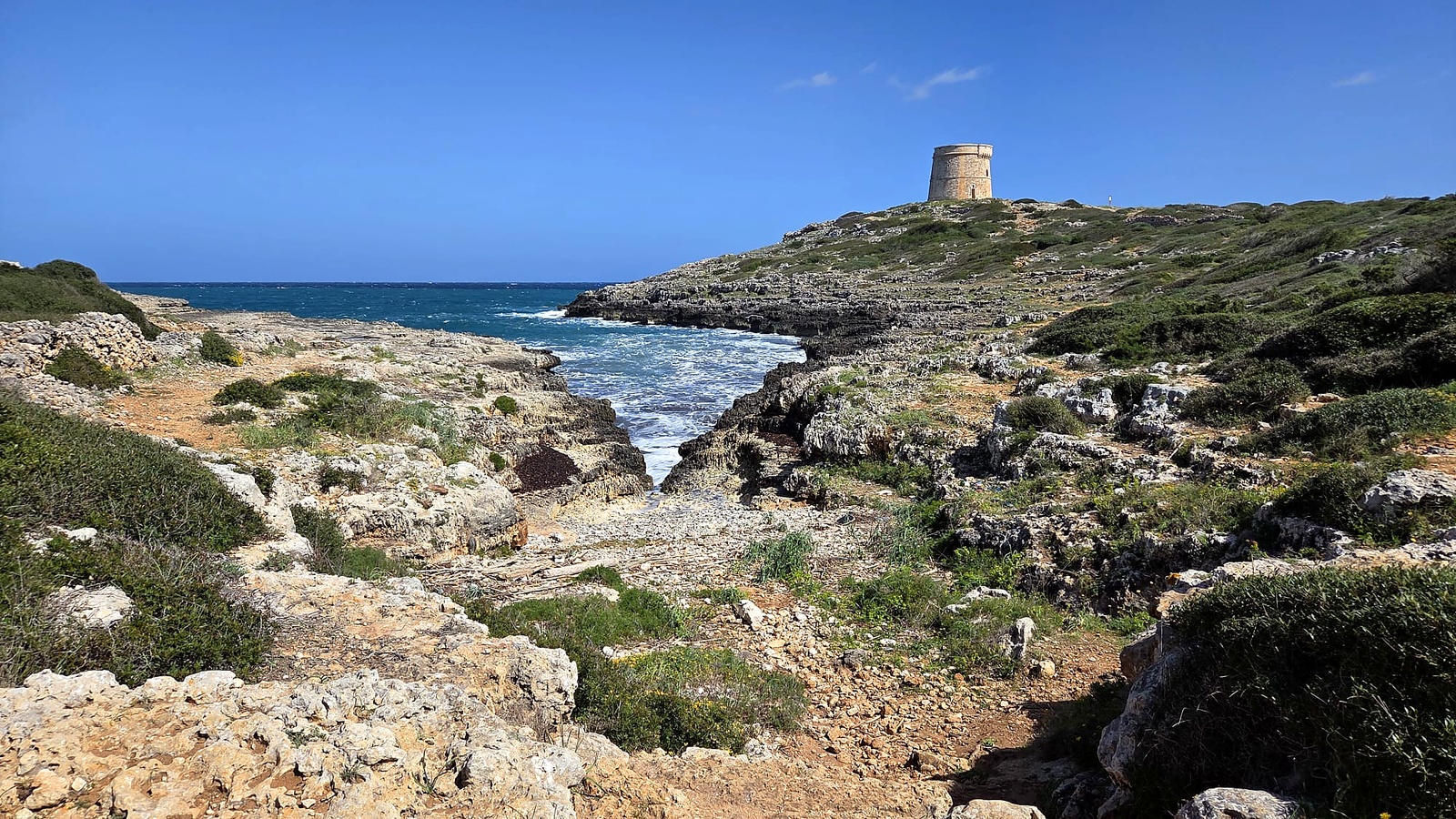
How to prepare your Menorca home for winter is less about protecting it from months of freezing temperatures and more about preparing for rain, humidity, wind, salt, water leaks and the problems that can develop unnoticed inside an empty property.
That distinction matters. A house that appears perfectly sound when its owners leave in October can develop a leaking terrace drain, failed appliance hose, mouldy wardrobe, seized exterior lock or storm-damaged shutter long before spring. Menorca’s winter is relatively mild, but several months of damp weather, changing temperatures and strong winds can expose weaknesses that remain almost invisible during the dry summer.
Long-term climate figures for Menorca Airport show average relative humidity of around 75 to 77% through much of the winter. November is also one of the wetter months of the year, while strong northerly tramuntana winds can occasionally produce severe gusts.
For a second home, holiday property or house occupied only occasionally between autumn and spring, the objective is simple: prevent small failures from becoming expensive ones.
Preparing a Menorca Home for Winter: Quick Answers
| Question | Answer |
|---|---|
| When should a Menorca house be prepared for winter? | Ideally during October, before prolonged wet and windy weather becomes more likely. |
| Should the mains water be turned off? | Often yes when a house will be empty, provided no heating, irrigation, pool or other equipment requires a live supply. |
| Should all electricity be switched off? | Usually not. Alarms, internet equipment, leak sensors, dehumidification, pool filtration, pumps and other essential systems may need power. |
| Does a Menorca pool need to be drained for winter? | Usually not. In Menorca’s mild climate, a properly maintained pool will generally remain filled and continue on a reduced winter maintenance programme. |
| What are the main winter risks to an empty house? | Water ingress, hidden leaks, humidity, blocked drainage, storm damage, corrosion and problems that remain unnoticed for too long. |
| Should windows be left open for ventilation? | Not routinely. Open windows can create security and storm problems. Designed ventilation, controlled dehumidification and occasional airing during suitable weather are safer approaches. |
| Should somebody inspect the house during winter? | Yes. Remote monitoring is useful, but it does not replace a physical inspection, especially after severe weather. |
| Is freezing a major problem in Menorca? | Sustained frost is uncommon, although exposed pipework and unusual cold spells should not be ignored. |
| What should be checked first? | Roofs and terraces, drainage, water supplies, windows and shutters, exterior objects, humidity control, pool systems and security. |
In practical terms, preparing a Menorca home for winter means concentrating on five things: keeping rainwater out, controlling indoor humidity, preventing unnoticed water leaks, securing the exterior against strong winds and making sure somebody can physically inspect the property while it is empty.
Menorca’s Winter Is Mild, but It Is Not Gentle on Houses
The phrase Mediterranean winter can create the wrong impression for property owners. Temperatures are relatively mild, but buildings are exposed to conditions that are very different from those of the hot, dry summer.
At Menorca Airport, long-term average temperatures are around 14.9°C in November, 12.1°C in December and 10.8°C in January and February. Relative humidity remains high through much of this period, while autumn and early winter can bring substantial rainfall.
The important issue for an empty house is therefore persistent moisture rather than extreme cold. Rain can find weaknesses in roofs, terraces and window seals, while cooler internal surfaces can encourage condensation. Air trapped behind furniture or inside wardrobes may remain damp for weeks.
Wind adds another dimension. Menorca is exposed to strong tramuntana conditions, particularly during the colder part of the year. Doors, windows, shutters, awnings, antennas and anything loose outdoors therefore deserve attention before a property is left unattended.
Winter preparation should begin with the building itself, not with the heating controls.
Start With the Roof, Terraces and Every Route Water Can Take
One of the most important jobs before winter is establishing where rainwater will go.
Flat roof terraces, balconies, patios and conventional roofs should be inspected for cracked surfaces, failed joints, deteriorating sealant, damaged flashing and evidence of previous water penetration. Any unexplained stain on an internal ceiling or upper wall deserves investigation before several months of wetter weather.

Drainage points require particular attention. Leaves, pine needles, dust and other summer debris can partially obstruct an outlet without blocking it completely. The problem may only become obvious when sustained rainfall arrives.
Gutters, downpipes, terrace drains, patio gullies, light wells and pool overflow routes should all be clear.
Do not simply look at the opening and assume that a drain is working. Where practical, test that water actually passes through the system properly.
A drain that appears clear at the surface can still contain a restriction further down.
Roof access can also be dangerous. Anything involving work at height, fragile roofing or waterproofing repairs should be left to somebody properly equipped and qualified to carry out the work.
Inspect Windows, Doors and Shutters Before the First Storm
A window that appears watertight in August may never have been tested by driving winter rain.
Check seals around windows and exterior doors, particularly on the sides of the property most exposed to wind. Look for cracked sealant, staining below frames, loose hardware and drainage holes that have become blocked.

Traditional shutters also need attention. Hinges, catches and retaining hooks should operate properly, while timber should be checked for rot, splitting or failed coatings.
Metal components close to the coast deserve inspection for corrosion. Hinges or locks that are already stiff in October may deteriorate considerably after several months of salt, humidity and rain.
Retractable awnings should normally be closed and secured rather than left extended throughout winter. Removable fabrics and shades should be stored if their design allows it.
The aim is not simply to stop something breaking. A loose shutter or fitting can become a danger to neighbouring properties during severe winds.
Do Not Leave Outdoor Furniture to Test the Tramuntana
Outdoor furniture that feels heavy during calm summer weather should not automatically be regarded as storm-proof.
Store lightweight chairs, cushions, parasols, decorative objects and anything else that could move. Large furniture that remains outside should be secured appropriately, while umbrellas should be removed from their bases.
Planters deserve attention as well. Large pots can overturn, while smaller containers can become airborne. Balcony and roof-terrace objects need particular care where falling items could endanger somebody below.
Barbecues, portable heaters, children’s equipment, pool toys and gardening tools should also be stored or properly secured.
Covers need to be fitted carefully. A loose furniture or barbecue cover can itself become a sail in strong winds.
This is one of the simplest parts of preparing a Menorca property for winter and one of the easiest ways to prevent unnecessary damage.
Decide What to Do With the Water Supply
An unnoticed water leak can cause enormous damage when nobody enters a property for several weeks.
Begin by locating the main stopcock and making sure it actually works. Owners sometimes discover that a valve has seized only when they urgently need to close it.
If the property will remain completely empty and no equipment requires a permanent water supply, shutting off the appropriate incoming valve can substantially reduce the consequences of a failed hose, tap, cistern or pipe.
That does not mean every property in Menorca should automatically have its water turned off.
Heating systems, irrigation, pools, water-treatment equipment, storage tanks, pumps and some fire-protection systems may require water. Rural properties can have wells, cisterns and more complicated arrangements that make generic instructions inappropriate.
Establish which systems require a supply before closing anything.
Flexible hoses serving washing machines, dishwashers and similar appliances should be inspected for cracking, swelling or deterioration. Where individual appliance valves can safely be closed while the property is empty, doing so removes another possible source of leakage.
External taps and exposed pipework should also be checked. Serious freezing is uncommon in Menorca, but damaged fittings and ageing connections can still leak.
Do Not Simply Switch Off the Whole Electrical Supply
Turning off every circuit may seem like the safest way to leave an empty house, but modern properties often depend on electricity precisely while nobody is there.
An alarm may require power. So may the internet router connecting cameras and sensors, a pool pump, water pump, dehumidifier, refrigerator, irrigation controller, electric gate or solar-energy equipment.
A better approach is to identify the circuits that need to remain active and isolate those that do not.
Unnecessary appliances can be unplugged, while essential systems should be clearly identified before departure. If the distribution board is confusing or poorly labelled, correcting that can save valuable time during an emergency.
Remote technology also needs to be tested realistically. A camera or humidity sensor is of limited value if the internet router loses power and nobody realises it.
Where possible, monitoring should alert the owner not only when something goes wrong, but also when an important device stops communicating.
A prolonged power failure is another reason technology should complement rather than replace physical inspections.
Humidity Is One of the Most Important Menorca Winter Problems
A closed Mediterranean property can become damp surprisingly quickly.
The outdoor environment is already humid during winter, and once internal surfaces cool, moisture can condense on windows, walls and other colder areas. Rooms with poor air circulation, wardrobes against exterior walls and closed cupboards can be particularly vulnerable.

Persistent damp should be prevented rather than treated as a normal feature of winter.
Leaving windows permanently open is not usually a sensible answer. Outdoor air can itself contain considerable moisture, while open windows introduce rain, wind and security risks.
Use the ventilation systems the building was designed to have. Do not block air vents, and make sure extractor systems are working correctly.
Where active dehumidification is necessary, a properly installed unit with safe continuous drainage is considerably more suitable for an unattended property than a small machine whose collection tank will simply fill.
A digital hygrometer can be useful even when no automatic equipment is installed. Connected temperature and humidity sensors can provide an early warning that conditions inside a closed room are changing.
Do Not Forget What Is Inside Wardrobes and Cupboards
Winter damp often appears first in places that receive very little airflow.
Do not pack wardrobes tightly before leaving. Allow some circulation around clothing and textiles, particularly where furniture sits against an exterior wall.
Bedding should be completely dry before being stored. Damp towels, beach equipment, cushions and swimwear should never be put away simply because they will not be needed until spring.
Furniture positioned directly against a cold wall can trap humid air behind it. Creating a modest gap improves circulation and also makes the area easier to inspect.
Cupboards beneath sinks should be checked carefully for slow plumbing leaks, while wardrobes adjoining bathrooms deserve additional attention because of their history of moisture exposure.
If a property has suffered mould previously, identifying why it happened is more important than simply cleaning the visible marks before leaving.
Air Conditioning and Heating Need a Winter Plan
A heat-pump air-conditioning system can be useful during a Menorca winter, but it should not simply be left operating on the same settings used in August.
Filters should be cleaned and condensate drains checked before the property is closed. A blocked drain can turn a system intended to control the indoor environment into a source of water damage.
Some owners use a low heating setting or dehumidification programme during periods when the house is empty. Whether that is suitable depends on the property, equipment, electricity supply and level of monitoring.
Portable heaters should not be used as an unattended solution.
If fixed heating will remain active, it should be properly installed equipment designed to operate safely under those conditions.
Gas installations require particular care. Boilers, heaters and related equipment should be professionally maintained, ventilation openings must not be obstructed and the gas supply should be managed according to the requirements of the individual installation.
Where a boiler is deliberately being left operational, follow the instructions of the technician who services that particular system rather than applying a generic rule.
A Menorca Swimming Pool Usually Does Not Need to Be Emptied for Winter
Draining a swimming pool simply because summer has ended is generally unnecessary in Menorca.
The island’s relatively mild winter climate means most professionally managed pools can remain filled while filtration and chemical treatment are adjusted for lower temperatures and reduced use.
The exact operating schedule will depend on the pool, pump, filtration system, chlorination method and water temperature. Saltwater systems can also behave differently as the water becomes colder.
Before winter, the pool should be cleaned and balanced, filters serviced where necessary and equipment checked for leaks.
The surrounding drainage also matters because winter rain adds water even when nobody is swimming.
Do not empty an in-ground pool merely to avoid maintaining it. Draining can introduce structural and maintenance issues, while unnecessarily refilling a large pool consumes a resource that Menorca already has to manage carefully.
The person responsible for maintaining the pool should establish the winter programme for that particular installation.
Check the Pool Area, Not Just the Water
A swimming pool is a system, not simply a body of water.
Inspect the pump room for leaks and dampness. Make sure electrical equipment remains protected and that covers or enclosures are secure without trapping damaging condensation.

Pool covers should drain correctly and must not accumulate large quantities of rainwater.
Loose accessories, inflatables, toys and cleaning equipment should be removed.
If an automatic top-up system remains active, remember that a malfunction could use a significant amount of water before anyone notices. Periodic meter checks or remote water monitoring can therefore be valuable.
Infinity pools, balance tanks and complicated hydraulic arrangements deserve professional winter settings rather than improvised adjustments.
Clear the Garden Before Winter Weather Arrives
A garden that has survived a dry Menorcan summer can behave differently once regular rain returns.
Dead branches and unstable limbs should be assessed before strong winds. Large trees close to the house, swimming pool, parking areas or power lines should be inspected professionally if there is any doubt about their condition.
Drainage around the garden matters just as much as pruning.
Clear leaves, pine needles and debris from channels, gullies and areas where runoff needs to escape. Water should not be allowed to accumulate against the building.
Irrigation generally requires less water during winter, but shutting it off completely is not appropriate for every garden. The programme should reflect the type of planting, recent rainfall, soil and exposure.
Check pipes, valves and irrigation boxes for existing leaks before reducing the schedule. A small underground leak can otherwise continue wasting water for months.
Remove Standing Water Around the Property
Small accumulations of water can create another avoidable problem.
Plant saucers, buckets, gutters, discarded containers, covers and other places that collect rainwater can provide breeding sites for mosquitoes, particularly during the warmer parts of autumn.
Empty unused containers and store them upside down where practical.
Check blocked gutters, plant pots, pool covers and decorative containers after rainfall.
This is another reason drainage and garden maintenance should be considered together. The same neglected corner can contribute to insects, damp and water damage.
Coastal Homes Need a Corrosion Inspection
Properties close to the sea face an additional winter maintenance issue: salt.
External locks, hinges, gates, screws, balustrades, outdoor lighting, air-conditioning units and electrical enclosures should be inspected before winter begins.
A component already showing corrosion can deteriorate much more rapidly when salt exposure combines with wind, rain and repeated wetting.
Maintain surfaces according to the manufacturer’s instructions and replace badly deteriorated fixings before they fail.
Outdoor air-conditioning condensers deserve particular attention because they remain exposed throughout the year. If the fins, casing, electrical components or mounting points show significant corrosion, arrange professional servicing.
Solar panels and mounting structures should also be visually checked after summer, particularly on exposed properties, although roof-mounted equipment should not be approached without safe access.
Prepare Your Menorca Home for a Power Cut
A second home should be able to tolerate a temporary electricity outage without creating another problem.
Think through what happens if power disappears.
Will the electric gate still open? Does the alarm have a working battery? Will the router restart automatically? Does the pool controller resume its programme? Will a dehumidifier turn itself back on?
Do not assume. Test the behaviour of important equipment where possible.
Some smart plugs remain off after power is restored, while other devices restart automatically.
If refrigerators or freezers are being left powered, avoid keeping large quantities of food inside unless somebody is checking the property.
A prolonged outage can result in a problem that remains undiscovered for weeks.
A refrigerator that is being switched off should be cleaned and dried thoroughly, with the door left slightly open to reduce the likelihood of mould and odours.
Security Is Part of Winter Preparation
Weather is not the only reason an empty house needs attention.
Doors and windows should be locked correctly, obvious signs of prolonged absence should be reduced and correspondence should not be allowed to accumulate for months.
Avoid advertising extended absences publicly or through social media.
Automatic lighting can help a property appear occupied, while alarm systems and cameras can provide additional protection.
There is still a balance to strike. Shutters need to be secure against winter weather, but a house that appears completely abandoned for several months may advertise the fact that nobody is there.
Make sure a trusted local contact has a working key, current contact details and permission to respond if something goes wrong.
The most sophisticated alarm system is of limited value if nobody can enter the property when an urgent physical inspection is required.
Check Your Insurance Before Leaving Menorca
Insurance should be part of the winter preparation process rather than something examined after damage has occurred.
Check how the policy defines an unoccupied property and whether additional conditions apply after a particular number of consecutive days.
Requirements differ between insurers. Some policies may expect periodic inspections, specific security arrangements or particular utilities to be isolated.
Others may distinguish between a second home that is used occasionally and a property left entirely empty for a prolonged period.
Make sure the insurer has an accurate description of how the property is being used.
Photographing the house before departure can also be worthwhile. Record the main rooms, exterior areas, pool condition, equipment and any areas with a previous history of problems.
Keep records of important maintenance and repairs.
The value of these photographs goes beyond insurance. They provide a dated reference if a problem is discovered later.
Remote Monitoring Is Useful, but It Is Not Property Management
Technology makes it possible to know far more about an empty property than was possible in the past.
Useful equipment can include water-leak detectors beneath sinks and appliances, humidity and temperature sensors, power-failure alerts, cameras, alarm systems and connected water meters.
Placed intelligently, relatively inexpensive sensors can provide valuable early warning.
A leak detector beside a water heater can be more useful than another camera pointed at an empty living room. A humidity sensor inside a bedroom with a history of damp can identify deteriorating conditions before mould becomes visible.
Technology cannot, however, clear a blocked drain, close a broken shutter or inspect a ceiling properly after heavy rain.
Remote monitoring should answer one important question: when does somebody need to go to the property?
Someone Should Physically Check the House
A second home left empty for several months should not be considered safely stored simply because the front door has been locked.
A useful inspection means entering the property and actively looking for problems.
The person checking should notice unusual smells, inspect ceilings and walls, look around plumbing, check cupboards, confirm that electricity and alarms remain operational, inspect outdoor areas and look at the pool and plant room.
Severe wind or heavy rainfall may justify an additional inspection rather than waiting for the normal schedule.
The appropriate frequency depends on the house, its exposure, condition, equipment and insurance requirements.
A modern apartment in Maó has a very different winter risk profile from an isolated coastal villa with a pool, garden and extensive external equipment.
What matters is that responsibility is clearly assigned.
“The neighbour sometimes has a look” is not the same as having somebody who knows exactly what they are expected to inspect, where important valves and switches are located and how quickly the owner wants to be contacted.
Five Common Winter Mistakes
| Mistake | Why it can cause problems |
|---|---|
| Switching off every electrical circuit | Essential systems such as alarms, pumps, dehumidifiers or pool filtration may stop working. |
| Leaving the pool untreated or emptying it unnecessarily | Water chemistry and equipment can deteriorate, while draining can introduce other problems. |
| Leaving windows open for months | Humid air, rain, wind and security risks can outweigh the intended ventilation benefit. |
| Ignoring roof and terrace drains | A single blocked outlet can turn heavy rainfall into water ingress. |
| Relying entirely on cameras and sensors | Technology can report some problems but cannot physically inspect or repair the property. |
The Final Walk-Through Before You Leave
A good final inspection should begin outside and work inwards.
Confirm that roof and terrace drainage is clear, external furniture is secured, shutters and doors operate correctly and garden hazards have been dealt with.
Look around the pool and plant room, then inspect visible pipework and appliance connections.
Inside, check beneath every sink and around toilets, the water heater, washing machine and dishwasher. Make sure there is no existing leak before deciding which water valves to close.
Confirm which electrical circuits will remain active and test the alarm, internet connection and any remote sensors.
Check humidity readings, leave wardrobes and internal areas arranged for sensible air circulation and make sure no damp textiles, food or unnecessary perishables remain.
Finally, give the person responsible for checking the property clear instructions and current contact details rather than simply handing over a key.
What to Check After a Major Menorca Storm
Strong weather changes the inspection priorities.
Once conditions are safe, check for displaced shutters, damaged awnings, fallen branches, blocked drains and water entry around windows, roofs and terraces.
Look inside even when nothing appears damaged outside.
Water can penetrate behind finishes and eventually show itself some distance from the actual entry point.
Check ceilings, external corners, window reveals and areas with a previous history of damp.
The pool, covers, pumps and outdoor electrical equipment should also be inspected following exceptionally heavy rain or strong winds.
Early intervention can be the difference between drying a small area and repairing an entire ceiling or wall.
When You Return After Several Months
Reopening the property deserves almost as much care as closing it.
Water systems should be brought back into use carefully. If the main supply has been isolated, open it gradually and inspect connections and appliances as the system repressurises.
Do not simply open the stopcock and walk away.
Water that has remained stagnant in unused plumbing should be flushed from taps and showers before normal use, particularly after a long absence.
Ventilate the property appropriately and inspect for any signs of damp before putting wardrobes, bedding and soft furnishings back into normal use.
The swimming pool should be tested and adjusted before regular bathing resumes.
Air conditioning, heating and other systems that have spent months in reduced operation should also be checked before they are expected to work heavily again.
Spring reopening should confirm that the winter strategy worked rather than simply switching everything back on.
Menorca Winter Property Checklist
| Area | Before leaving | During winter |
|---|---|---|
| Roof and terraces | Inspect surfaces and clear drains | Recheck after major storms |
| Windows and shutters | Check seals, locks, hinges and catches | Inspect for wind or water damage |
| Water | Test stopcock and decide what can be isolated | Look for leaks and abnormal water use |
| Electricity | Identify essential and non-essential circuits | Confirm power and monitoring remain online |
| Humidity | Check ventilation and install monitoring where useful | Watch humidity trends and inspect for condensation |
| Pool | Establish a winter maintenance regime | Check water, equipment and level |
| Garden | Remove loose items, assess branches and clear drainage | Inspect after high winds |
| Irrigation | Reduce or adjust as appropriate | Check for leaks and respond to rainfall |
| Security | Test alarm, locks, cameras and lighting | Arrange physical inspections |
| Insurance | Check unoccupied-property conditions | Keep evidence of required inspections |
| Local contact | Supply keys and clear instructions | Inspect and respond when necessary |
Is It Worth Paying Someone to Look After a Menorca Property Over Winter?
For some homes, occasional assistance from a trusted neighbour may be sufficient.
For others, particularly detached villas, coastal homes, properties with pools and gardens, or houses that remain empty for much of the year, a more structured arrangement can make sense.
The value is not simply having somebody open the front door occasionally.
A useful inspection should recognise early signs of water penetration, humidity, equipment failure, pest activity, storm damage and unusual water or electricity use.
It should also establish a clear chain of responsibility when something needs immediate attention.
The person responsible should know where the water stopcock and electrical board are, how to contact the pool technician, who services the alarm and what constitutes an emergency that should be reported immediately.
Winter property care is therefore less about watching a house and more about preventing small defects from spending several months becoming expensive repairs.
The Most Important Winter Rule
Preparing a Menorca home for winter is ultimately about removing uncertainty.
Rainwater should have somewhere to go. Exterior objects should not be able to move in strong winds. The indoor environment should not remain persistently damp. Essential equipment should continue to operate, while unnecessary sources of risk should be isolated.
Most importantly, somebody should notice when those plans fail.
Menorca’s winters are rarely severe by northern European standards, but that does not make an empty property maintenance-free. The combination of humidity, rainfall, tramuntana winds, salt exposure and long periods without occupants creates a different type of risk.
A house properly prepared in October should not require constant attention throughout winter. It should, however, have enough protection, monitoring and human oversight for a small problem to be discovered while it is still small.
Research and Methodology
This guide was researched using long-term climate information from Spain’s State Meteorological Agency, safety and severe-weather guidance from the Balearic Government, Balearic public-health information, Spanish home-security guidance and recognised technical information concerning damp, water systems and swimming pool maintenance.
Recommendations involving individual electrical, gas, heating, pool, roofing or water installations are deliberately framed as inspection and planning guidance rather than universal technical instructions. Menorcan properties vary considerably in age, construction, exposure and equipment, and work involving safety-critical systems should be carried out by an appropriately qualified professional.
Climate averages describe typical long-term conditions rather than a forecast for a particular winter. Owners should also check their individual insurance policy because requirements for properties left unoccupied can vary between insurers.
Last independently researched and checked: 6 October 2026.