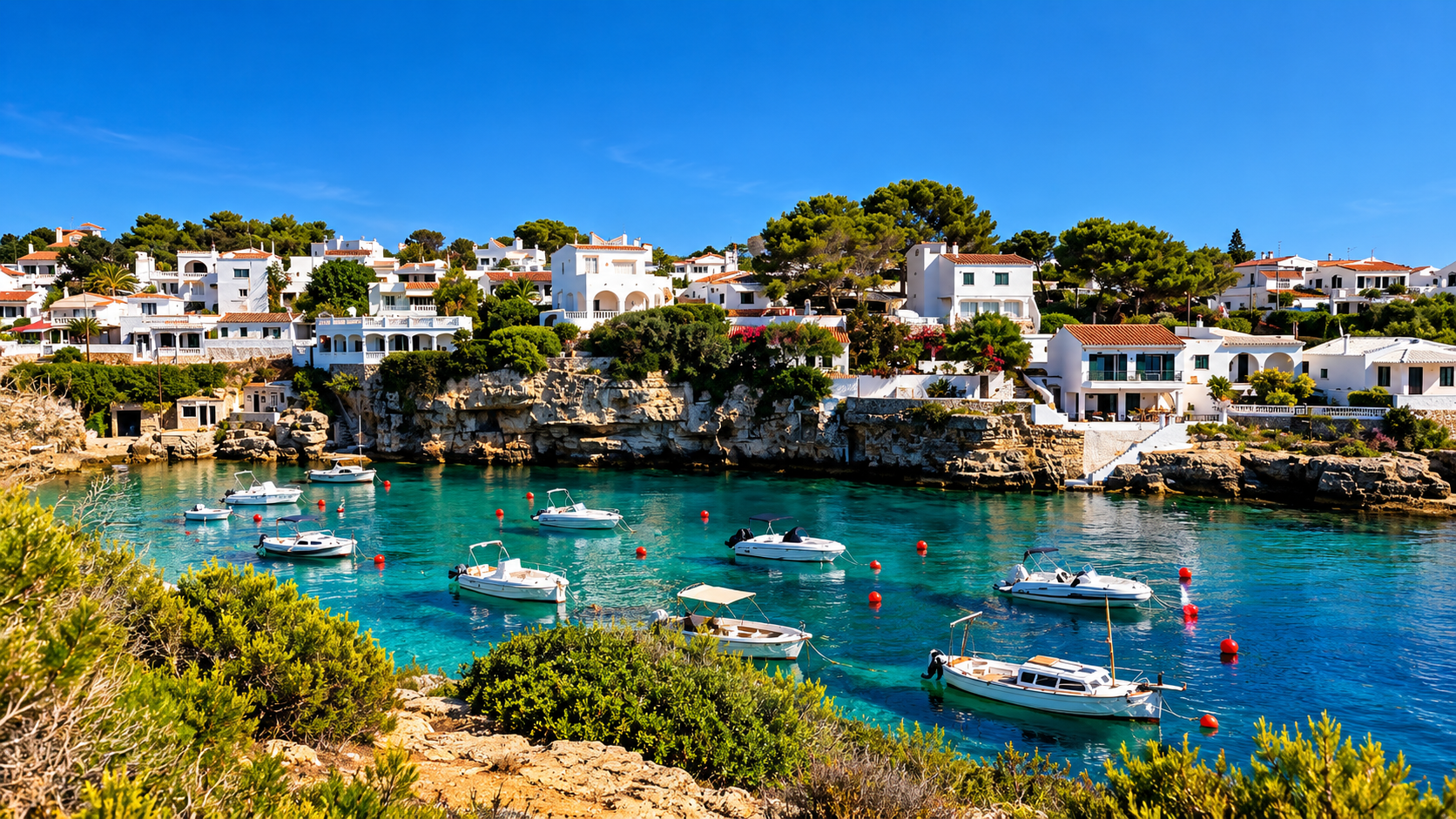
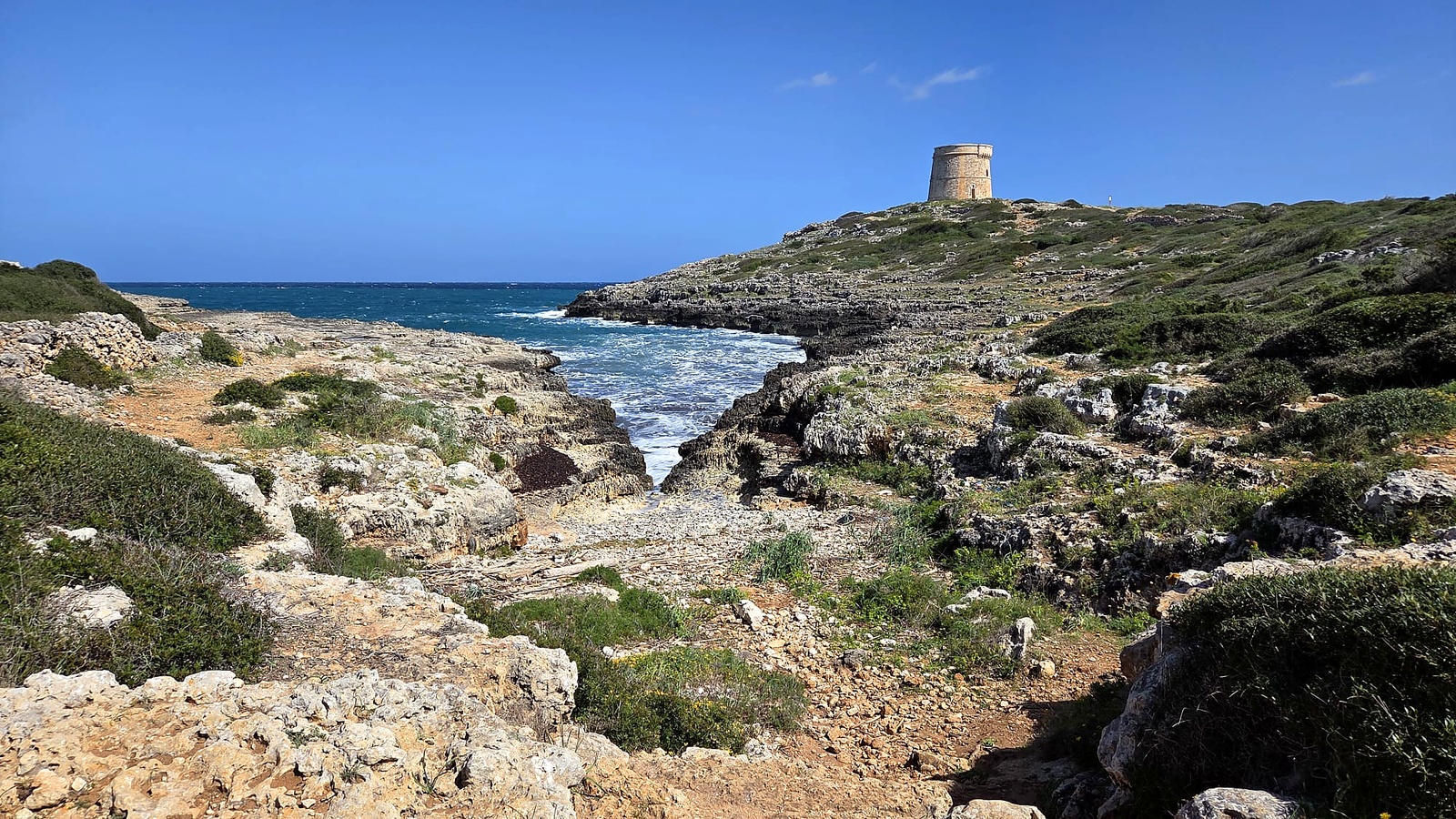
Menorca’s long-term stability increasingly depends on whether the island can build a functioning year-round economy beyond the summer peak.
Menorca winter tourism explained
Menorca’s long-term economic stability increasingly depends on whether the island can build a functioning winter economy that supports housing, employment and year-round business activity beyond the summer peak.
Rebalancing tourism, stabilising housing and building a year‑round island economy
As Menorca enters another summer season, attention naturally turns to peak demand, capacity management and the visible pressures that come with success. But if the island is serious about building a more balanced, more resilient tourism model, the most important work begins now, not in autumn, and certainly not once winter arrives.
Winter tourism does not appear in November by accident. It is created months earlier through decisions about routes, staffing, accommodation, housing availability and, most importantly, whether the island presents itself as a place that will still function once peak season ends.
The contrast in the data remains stark. Menorca welcomed around 1.77 million visitors in 2025, yet just 13,699 arrived in December, a decline of more than 29 per cent year on year. Of those, more than 10,200 were domestic travellers, while international markets were extremely limited, with fewer than 900 visitors each from the UK and Germany.
This is not primarily a branding problem. It is a structural one.
Menorca is not a low-demand destination.
It is a high-demand destination operating within a narrow time frame.
Menorca winter tourism is therefore not primarily about attracting entirely new demand. It is about redistributing existing tourism activity more evenly across the year to improve economic stability, housing continuity and operational resilience.
The scale of Menorca’s winter imbalance
The imbalance becomes clearer when the data is read as a system rather than as isolated figures.
In 2025, Menorca recorded more than 1.7 million visitors, yet winter demand remained minimal and highly concentrated in the domestic market. At the same time, accommodation patterns reveal a large extra‑hotel sector, accounting for 28% of overnight stays, while labour data shows a seasonal swing of nearly 50% between summer and winter employment.
Even more revealing is what is not visible. In December 2025, no meaningful hotel occupancy data was published for Menorca, not because performance was strong, but because too few establishments were open to measure reliably.
This is the real issue.
Menorca’s winter problem is not simply low occupancy. It is a lack of operational density.
This distinction matters because destinations with low seasonal density struggle to maintain the minimum level of open infrastructure required for visitors to trust the destination outside peak periods.
Why Menorca’s winter economy still fails to function
Menorca has the foundations for a credible winter destination.
The island is safe, supported by year‑round healthcare, and offers a strong natural and cultural base: walking routes such as the Camí de Cavalls, cycling terrain, gastronomy, Talayotic heritage and protected landscapes that are arguably at their best outside summer.
The constraints are practical.
The climate is mild but not warm enough to compete in the mass winter‑sun market. With January highs around 14°C, Menorca sits outside the broad “escape the cold” segment dominated by destinations such as the Canary Islands.
Access is limited. Winter air connectivity remains narrow and predominantly domestic, raising friction for international travel.
More important than either of these is the question of availability.
Too much of the island closes.
Restaurants shut. Hotels close. Services become inconsistent.
As a result, visitors do not see an island that is quieter — they see one that is uncertain.
And visitors do not book potential.
They book certainty.
The housing connection: why this is not just a tourism issue
Winter tourism cannot be separated from Menorca’s housing reality.
The island is already experiencing pressure on housing availability, particularly for workers in the tourism sector. Businesses cannot operate year‑round without staff, and staff cannot remain on the island without stable accommodation.
This creates a structural imbalance in the system. Summer demand drives high-yield, short-term use of housing, while winter activity remains too weak to support continuity. Businesses struggle to justify year-round operations, and workforce stability declines as a result.
The result is a reinforcing cycle of closure, both economic and residential.
From this perspective, winter tourism is not an optional addition to the system.
It is one of the mechanisms that can help stabilise it.
What successful winter destinations have already understood
The destinations that thrive in winter do not succeed purely because of climate. They succeed because they have built systems that support continuity.
Florida provides the clearest example. Each winter, an estimated 1.5 million seasonal residents relocate temporarily, many staying for months rather than days. These visitors are not high‑turnover tourists. They are long‑stay residents who support services, stabilise employment and generate predictable demand.
Similar models exist, at smaller scales, across southern Europe.
The Algarve and southern Spain rely on extended winter stays from northern European visitors. Malta combines strong connectivity, cultural programming and favourable conditions for longer-term stays.
The lesson is consistent.
Winter economies are built not on volume, but on duration, continuity and trust in the system. This is increasingly the direction visible across constrained island economies where infrastructure pressure, housing scarcity and tourism concentration are forcing destinations to shift from seasonal volume models toward longer-duration, lower-intensity economic activity.
Menorca cannot and should not attempt to replicate these destinations in scale. But the principle is directly applicable: grow longer and steadier, not bigger and more concentrated.
The mindset shift Menorca still needs to make
Beyond infrastructure and policy, one constraint remains fundamental.
Menorca still operates, collectively, as if winter is a period of closure.
Businesses plan around it. Staff expect it. Visitors assume it.
The result is a self‑reinforcing cycle:
businesses close because demand is weak, and demand remains weak because businesses close.
Breaking this cycle does not require the island to stay fully open.
It requires a visible baseline of activity that signals continuity.
A destination does not need everything open.
It needs enough consistently open to create confidence.
Rebalancing tourism, not expanding it
The objective is not to increase overall visitor numbers dramatically. It is to redistribute activity across the year.
Even a modest shift — redirecting 5 to 10 per cent of annual demand into winter — would reshape the system. Spread across several months, that demand would remain far below summer intensity while improving utilisation of existing assets.
The impact would be structural. Seasonal pressure on housing would ease, employment would stabilise, infrastructure would be used more efficiently, and businesses would operate across a longer and more predictable revenue cycle.
Winter tourism is not about growth for its own sake.
It is about balance.
The opportunity to move from volume to value
Winter demand also offers a commercial opportunity.
Visitors travelling in the off‑season behave differently. They tend to stay longer, spend more per day on experiences and prioritise quality over quantity. They are less driven by volume and more by depth of experience.
This aligns with a more sustainable form of luxury — one based on space, time, calm and authenticity.
Menorca’s natural positioning supports this shift. Its strongest qualities are amplified outside peak periods. Less crowding, better access to landscape and culture, and a more relaxed pace all increase perceived value.
The strategic shift is therefore clear: from maximising short‑term occupancy peaks
to maximising long‑term yield and stability.
What needs to be built
For winter tourism to function, the island needs coordination, not isolated efforts.
At a minimum, a functioning winter system requires:
- a visible base of open accommodation
- a reliable layer of restaurants and services
- accessible transport between core areas
- curated, bookable experiences
- and the workforce to support all of the above
Around this base, demand can expand into longer stays, group travel, culture-led visits and low‑intensity tourism that fits the island’s character.
Where change actually starts
For all the strategy and analysis, the starting point is straightforward.
Menorca’s winter economy will not be transformed by a single policy decision or a marketing campaign. It will change when a critical number of businesses and operators choose to act at the same time.
That change may begin simply:
a group of hotels extending their opening period, restaurants maintaining winter service, property owners offering longer stays, and operators aligning activities around a shared seasonal calendar.
Individually, these decisions are small.
Collectively, they create something far more important: certainty.
And certainty is what allows demand to form.
No successful winter destination began at scale. They began with coordinated continuity — a base layer strong enough to be trusted, around which demand could grow.
Menorca does not need the entire island to change at once.
It needs places where visitors know they can arrive and experience a functioning environment.
From that point, growth becomes possible. Menorca winter tourism is ultimately less about attracting large numbers of visitors and more about creating enough continuity for the island to function year-round.
The direction is already clear
The shift toward a more balanced model is not theoretical. It is already underway.
Tourist licensing restrictions are tightening. Housing pressure is intensifying. The scope for further high‑volume summer expansion is becoming more limited, both politically and practically.
If Menorca does not develop a functioning winter economy, it risks becoming more restricted without becoming more stable.
That is the strategic challenge.
A different kind of growth
Menorca does not need to become busier.
It needs to become more evenly active.
A rebalanced tourism model would reduce peak pressure, stabilise employment, support housing access and create a more resilient year‑round economy.
Winter tourism is not an add‑on to that model.
It is one of the few tools capable of making it work.
As the island prepares for another strong summer, the real question is not how full August will be.
The direction of travel is already clear. Regulatory tightening, housing pressure and limits on further high-volume summer expansion mean that the island’s future cannot rely on peak growth alone.
It is whether Menorca uses this moment to build a winter that finally works —
for visitors, for businesses and for the community that lives here all year.
Common questions about Menorca winter tourism
Why is winter tourism important for Menorca?
Winter tourism can help stabilise employment, reduce seasonal pressure and support year-round businesses and housing availability.
Does Menorca receive many winter visitors?
No. Visitor numbers fall sharply, particularly from international markets, creating a strong seasonal imbalance.
Can Menorca become a year-round destination?
Menorca is unlikely to become a mass winter-sun destination, but it can build a more stable off-season economy focused on culture, gastronomy, nature and longer stays.
Why does housing in Menorca matter for winter tourism?
Businesses cannot operate year-round without stable staff accommodation, making housing availability part of the tourism system itself.
Why is Menorca winter tourism considered important for sustainability?
Menorca winter tourism can reduce pressure on peak summer periods while improving year-round economic stability, workforce continuity and infrastructure utilisation across the island.