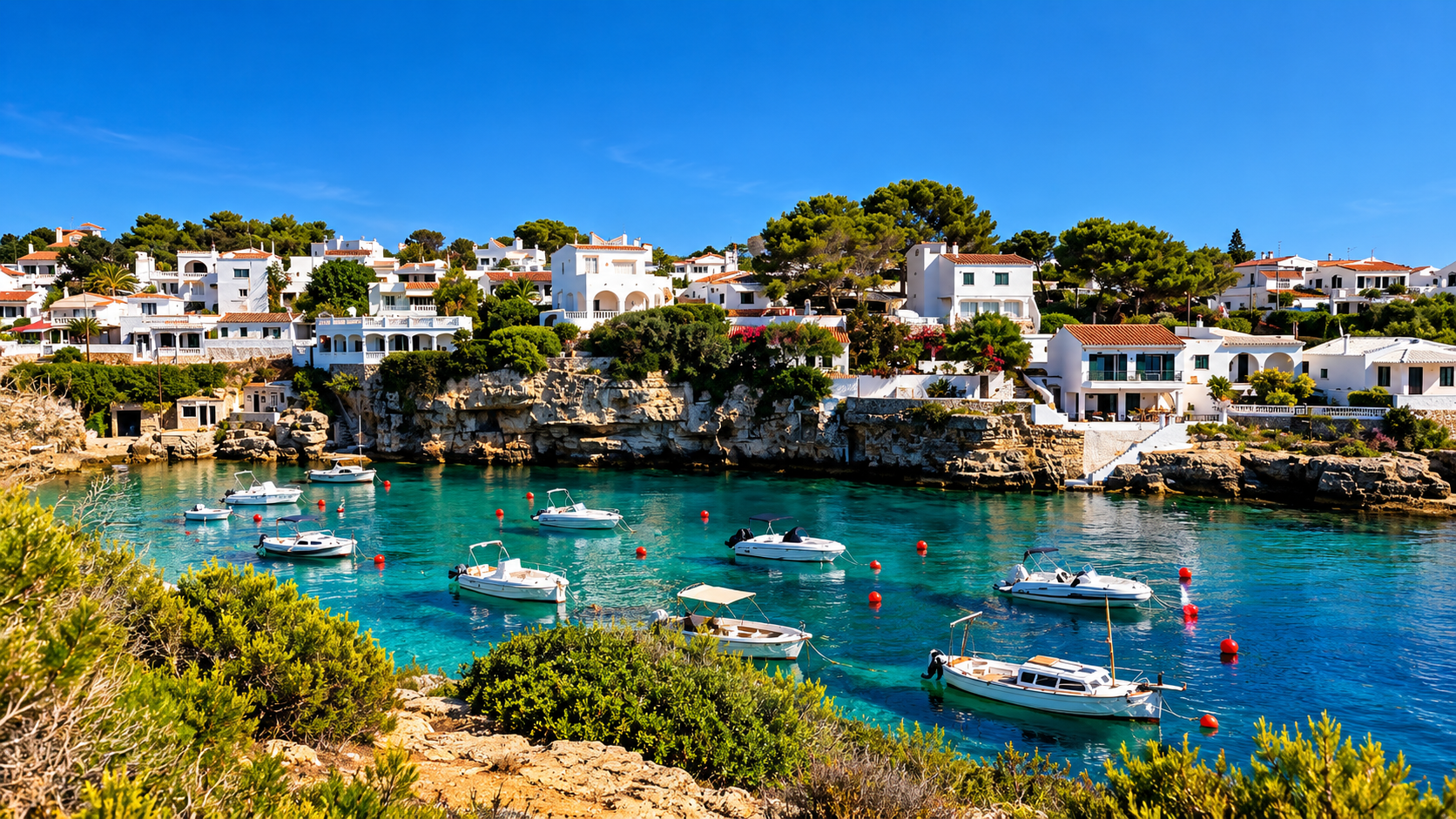
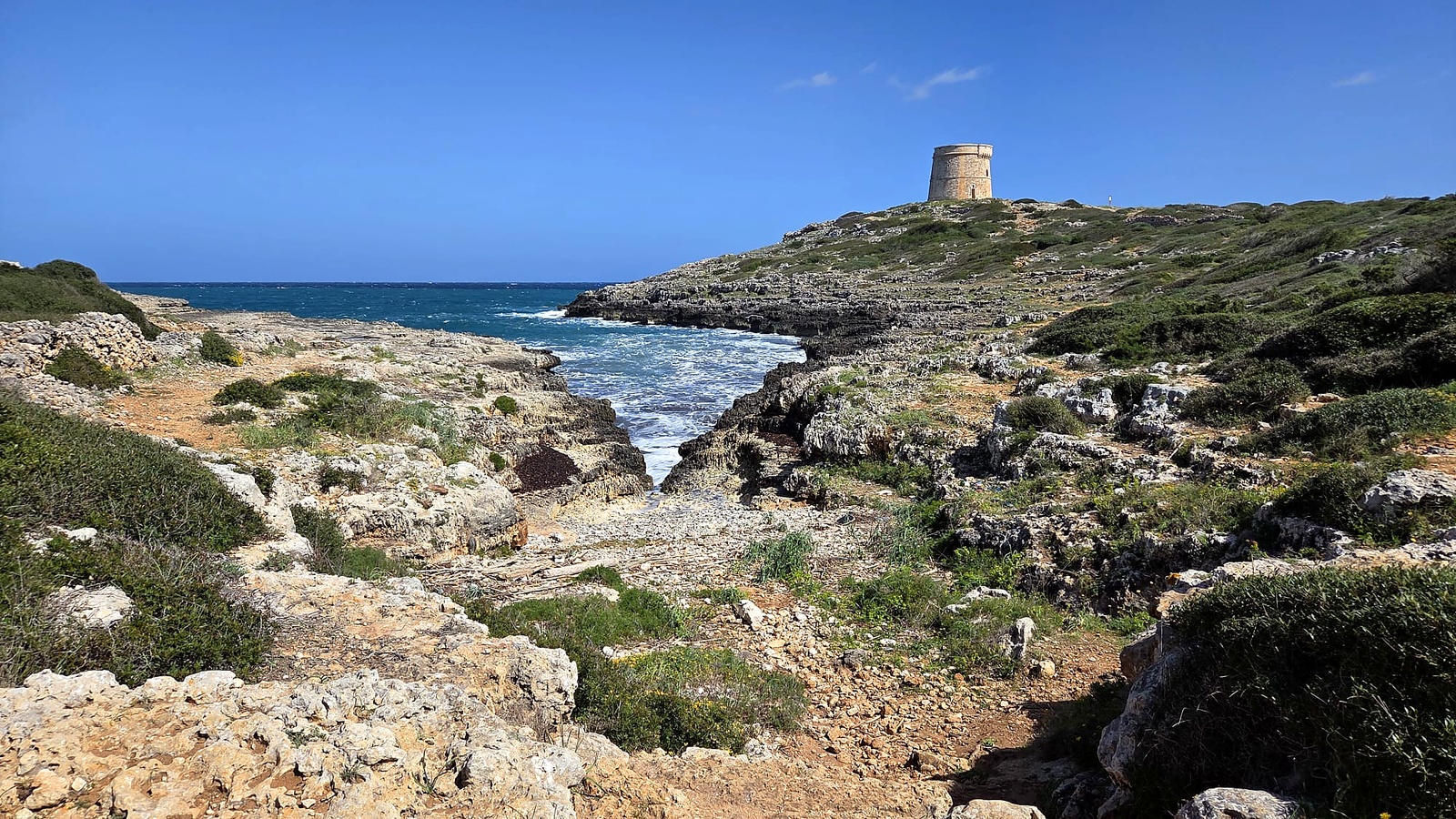
Menorca is one of the strongest family destinations in Spain, but for very specific reasons. It is not built around theme parks, large resorts or big-city infrastructure. Compared with Mallorca and Ibiza, it is quieter, smaller and far less commercialised. That makes it easier with children, but also more limited.
Designated a Biosphere Reserve by UNESCO in 1993, Menorca has developed with tighter planning controls than Mallorca or Ibiza. That has helped preserve its coastline, limit overdevelopment and maintain a lower-intensity feel. UNESCO describes Menorca’s Biosphere Reserve as including gullies, caves, wetlands, dunes, coasts and islets, with around 220 bird species and 1,000 plant species recorded.
That protected character is central to the island’s family appeal. It also shapes its limits. Menorca’s protected landscape and sustainability model continue to shape tourism policy and development. Read more: Menorca Conservation and Sustainable Tourism in 2026.
For a holiday, Menorca is consistently strong. For living, it can be excellent, but only with the right setup and expectations. The key is to understand that those are two very different questions.
Menorca’s wider tourism and housing balance is also changing rapidly, particularly outside peak season. Read: Menorca Winter Tourism Explained.
Is Menorca good for families?
Yes, Menorca is very good for family holidays, especially for younger children, beach-based trips and families who prefer a slower rhythm. For permanent living, Menorca can also work well, but only for families who understand the island’s limits around housing, schooling, transport, healthcare access and winter services.
The island is best suited to families who value outdoor life, manageable distances and a calmer pace. It is less suited to families who need extensive international schooling, large-city infrastructure or fully car-free daily living.
Best areas at a glance
- Easiest family holiday: Cala Galdana, Son Bou
- Most practical for living: Maó
- Best lifestyle town: Ciutadella
- Best balance: Sant Lluís
- Best for quieter living: Ferreries, Es Mercadal
Quick family verdict
Menorca is best for family holidays built around beaches, nature, short outings and simple routines. It is strongest for toddlers, primary-school-age children and families who prefer low-pressure travel over structured entertainment.
For living, the island works best when the family chooses its base carefully. Maó offers the strongest infrastructure, Ciutadella offers the strongest western town lifestyle, Sant Lluís gives a quieter residential option close to Maó, and Ferreries or Es Mercadal suit families who want a more local, central base.
The main constraint is housing availability, followed by schooling choice and car dependency. Housing pressure and tourism regulation are now closely connected on the island. Related: Menorca Tourist Licences Explained (2026).
Who Menorca is really right for
Menorca works particularly well for:
- Families with toddlers and primary-age children
- Families who prefer beaches and outdoor time over attractions
- Parents who want short distances and simple logistics
- Visitors who value a calm, predictable daily rhythm
It is less suited to:
- Families needing extensive international schooling options
- Those wanting large resorts, theme parks or constant entertainment
- Families hoping to live without relying on a car
- Households expecting city-level services year-round
Why Menorca works so well for family holidays
Menorca’s biggest advantage for visiting families is scale.
The island is small enough that most journeys feel manageable, yet varied enough to keep a family holiday interesting. The main east-west route between Maó and Ciutadella gives a realistic sense of this compact geography. The airport is also linked to Maó by Line 10, with official route information published by Autocares Torres.
That scale changes the feel of a holiday. Airport transfers are simpler, day trips are realistic with children, and families rarely feel trapped in one resort. Compared with Mallorca, where distances alone can define a holiday, Menorca feels easier to navigate.
The island’s second advantage is that its family offer is based on beaches and outdoor life rather than attraction culture. A typical family holiday involves mornings at the beach, short outings, early dinners, harbour walks, light heritage visits and slower evenings. That rhythm suits families who want space rather than constant stimulation.
Menorca’s lower tourism intensity also matters. Even in peak season, many parts of the island feel calmer than the busiest parts of Mallorca or Ibiza. There is less aggressive nightlife spillover, fewer large-scale entertainment zones and a more relaxed atmosphere in many residential areas.
The result is not excitement in the conventional resort sense. It is ease.
What families often notice within a few days is how routines simplify. You are not constantly planning around distance, queues or bookings. Children settle into a predictable rhythm of beach, food and rest much faster than in busier destinations. That reduction in friction is a major part of Menorca’s appeal and one of the reasons many families return repeatedly.
Where Menorca is weaker for families
Menorca’s strengths are real, but so are its limits.
The first is schooling. Menorca has a strong network of public and publicly funded schools, but it does not have the same depth of major international or British-curriculum provision found in Mallorca. For families relocating from the UK or other English-speaking countries, this can be decisive. Many families integrate into the local education system rather than recreating a UK-style school path.
The second issue is housing. Long-term rentals are limited, many listings are seasonal, and resort areas can be difficult for year-round living. This affects relocating families far more than holidaymakers.
The third issue is transport. Public transport works for main town connections, airport links and selected resort routes, but daily life outside core corridors usually requires a car. School runs, supermarkets, beaches, healthcare appointments and winter activities are much easier with private transport.
The fourth is healthcare geography. Menorca’s reference hospital, Hospital Mateu Orfila, is located in Maó, which centralises most specialist care. IB-Salut lists the hospital in Maó and the Menorca health area also includes a primary care network of five health centres, four basic health units and three consultorios. That is a credible island healthcare structure, but where you live affects access time.
These constraints do not usually affect a one-week holiday, but they become central for families considering longer stays or relocation. Most negative experiences in Menorca come from a mismatch between expectations and reality rather than from the island itself.
Holiday vs living in Menorca: the key difference most articles miss
Menorca can feel almost perfect on a summer holiday. Beaches are accessible, restaurants are open, and the island is fully active.
Living on the island is different.
In winter:
- Some restaurants and seasonal businesses close
- Resort areas become much quieter
- Public transport reduces
- Daily life shifts towards local routines rather than tourism
This does not make Menorca a bad place to live. It simply means that the “August version” of the island is not the same as February. Families considering relocation should always test the island outside peak season before making decisions.
Best areas in Menorca for a family holiday
The best holiday base depends on the age of your children and the kind of trip you want.
Cala Galdana
Cala Galdana is one of the most straightforward family bases on the island. The bay is sheltered, the beach is accessible, and the resort layout is compact enough for families who do not want constant logistics.
It is particularly good for toddlers, first-time visitors and families who want an easy beach holiday. The limitation is that it becomes busy in peak summer and can feel less varied if you are staying longer than a week.
Son Bou
Son Bou is the island’s longest sandy beach and one of the most forgiving family environments. It offers space, easier beach access than many small coves, and a more open setting for long beach days.
It suits families who want sand, space and straightforward beach time. It has less town character than Ciutadella and the layout is more spread out, but for a beach-first holiday it remains one of the strongest options.
Sant Tomàs
Sant Tomàs is quieter and simpler. It works well for younger children and families who want a calm resort structure without too much intensity.
It is not the best choice for families seeking lots of evening variety, but it is one of the easiest options for a low-effort holiday.
Ciutadella and the west
Ciutadella is the strongest all-round base for families who want more than a resort. It has restaurants, atmosphere, historic streets, harbour life and access to west-coast beaches.
It suits older children, teenagers and repeat visitors. The trade-off is summer crowding, especially in the historic centre and around major events.
Punta Prima and Binibèquer
The south-east offers a quieter coastal alternative, particularly for families who want a more residential feel close to Maó and the airport. Punta Prima and Binibèquer provide beach access without the same resort intensity as some larger bases.
They are especially useful for families who want a calmer setting but still value proximity to services.
Arenal d’en Castell
Arenal d’en Castell is another strong family holiday option, particularly for younger children. Its curved bay, shallow water and contained feel make it easy to manage.
The main consideration is seasonality. Like many resort-led areas, it is much more active in summer than winter.
Best areas to live in Menorca with children
Living in Menorca is a different question from visiting. The best area is not always the prettiest or closest to the beach. Schools, healthcare, housing, winter services and transport matter more.
Maó: the most practical family base
Maó is usually the most practical base for families living year-round.
It has the island’s main hospital, the airport, the strongest service network and the densest concentration of practical infrastructure. It also gives access to a broad range of schools and daily services.
Maó is not always the dream image of Menorca, but for working families it is often the most functional choice.
Its harbour area provides more lifestyle appeal, but most practical family life happens slightly outside the port zone, where schools, supermarkets and everyday services are easier to access.
Best for: working families, healthcare access, airport access, year-round services.
Ciutadella: lifestyle over logistics
Ciutadella is the strongest western option. It has atmosphere, history, schools, restaurants and a strong town identity.
For many families, it feels more attractive than Maó aesthetically. The trade-off is distance from the main hospital and airport, plus more pressure in peak summer.
Families relocating here often prioritise lifestyle, walkability and aesthetics, but should factor in regular trips across the island for services such as hospital appointments or airport travel.
Best for: families prioritising town life, west-coast beaches and lifestyle.
Sant Lluís: quiet, residential and close to Maó
Sant Lluís is one of the best-balanced family areas. It offers a quieter residential environment while remaining close to Maó, the airport and the hospital.
It also gives access to south-east beaches such as Punta Prima and Binibèquer. The downside is price, because this balance is highly valued.
Many families choose Sant Lluís after initially focusing on Maó, because it offers a similar level of accessibility with a quieter residential feel.
Best for: families wanting calm, access and south-east coastal life.
Ferreries: underrated and local
Ferreries is often overlooked by relocating families, but it has real strengths. It feels local rather than tourist-led, sits in a central-west position and gives relatively easy access to Cala Galdana.
It does not offer immediate beach life, so a car is essential, but it can work well for families wanting a more grounded, year-round environment.
Best for: families wanting a local town feel and more central positioning.
Es Mercadal: central flexibility
Es Mercadal works well for families who value being in the middle of the island. It gives access to both north and south coasts, has a quieter rhythm and offers a strong sense of local life.
The limitation is scale. Services are more limited than Maó or Ciutadella, and families need to be comfortable with small-town living.
Best for: families wanting central access and a quieter lifestyle.
Alaior and the Son Bou corridor
Alaior offers more of a year-round town base, while Son Bou offers beach-first holiday appeal. For families, this corridor can work well, but living in a resort-facing area is very different from living in the town itself.
Best for: families balancing town services with beach access.
The real trade-offs by area
A useful way to understand Menorca is to think in trade-offs rather than “best places”:
- Maó: best services, least “holiday feel”
- Ciutadella: best lifestyle, less practical access
- Sant Lluís: best balance, highest pricing pressure
- Central villages (Ferreries, Es Mercadal): best value and local life, most car dependency
- Resort areas: easiest holidays, least practical for year-round living
Most families end up choosing based on which compromise feels most manageable rather than which area is objectively “best”.
When is the best time to visit Menorca with children?
Seasonality matters more in Menorca than many families expect.
Menorca warms steadily from spring into summer, with July and August the hottest months and temperatures staying high into September. In practical terms, this means late spring and early autumn are often the easiest times for families to visit, combining warm weather with fewer crowds and less pressure on beaches and infrastructure.
Spring: March to May
Spring is excellent for active families. The island is greener, quieter and better suited to walking, heritage visits and exploring towns.
It is less reliable for swimming than summer, but much better for mixed trips involving nature, archaeology and outdoor activity.
Best for: exploring, relocation trips, mixed-age families.
Summer: June to August
Summer is the easiest season for guaranteed beach weather and full resort services. It is also the hottest, busiest and most expensive period.
Families travelling during school holidays will often need to visit in summer, but should plan carefully around heat, parking and beach crowding.
Best for: school holidays, teenagers, full resort activity.
Autumn: September to October
Autumn is often the best overall balance. The sea remains warm, crowds reduce and the island becomes easier to move around.
September is particularly strong for families who want swimming without August intensity.
October in particular is often underestimated. It is no longer peak beach season, but it offers some of the clearest insight into what everyday life on the island feels like once tourism drops.
Best for: toddlers, mixed-age families, relaxed beach trips.
Winter: November to February
Winter is a completely different Menorca. It is quiet, local and limited in terms of tourism infrastructure.
For holidays, it is best suited to families interested in walking, culture and testing the island’s real-life rhythm. For relocation research, winter can be extremely useful because it shows what remains open when tourism fades.
Families considering relocation will often learn more from one winter week than from multiple summer visits, because it reveals the true availability of services, housing and daily routines.
Best for: relocation scouting and realistic year-round assessment.
Family life in Menorca: schools, childcare and healthcare
Schools
Menorca has public schools across all municipalities, concertado options and some bilingual programmes. It also has secondary provision in the main towns.
For relocating families, the main decision is whether they want integration into the local system or a fully international route. Menorca is much stronger on the first than the second.
This is one of the biggest differences between Menorca and Mallorca. Families needing a wide choice of international schools may find Menorca limiting.
Childcare from 0 to 3
Public and publicly funded early-years provision has expanded across the Balearics, and 0–3 schooling in the public and publicly funded network has been made free from the 2024–25 school year. Availability, meals, early-opening options and practical access still vary by centre.
For families with very young children, the key question is not only whether provision exists, but whether it is available in the right municipality and at the right time.
Healthcare
Menorca’s healthcare system is credible but centralised.
Hospital Mateu Orfila in Maó is the island’s main reference hospital. The wider Menorca health area includes a distributed primary care network, but specialist hospital access is concentrated in Maó.
For families, this means Maó offers the most practical healthcare access. Ciutadella and western areas remain viable, but journeys are longer.
Transport and accessibility for families
Public transport in Menorca is better than many visitors assume, but it is not a full substitute for a car.
Main routes connect the key towns, airport links are straightforward, and seasonal services support some beach and resort movements. However, families wanting flexibility, especially with younger children, usually benefit from hiring or owning a car.
For holidays, a car is useful if you want to visit several beaches, travel outside main routes or stay in a quieter base. For living, a car is usually essential unless your life is concentrated in Maó or another well-served town.
Accessibility is improving, but it varies heavily by location. Some beaches, including well-known family beaches such as Cala Galdana, Son Bou, Punta Prima and Arenal d’en Castell, are more manageable than remote virgin coves. Families using prams or wheelchairs should plan around accessible beaches and flatter resort layouts rather than relying on the most photogenic locations.
Cost of living in Menorca for families
For families visiting Menorca, the biggest costs are accommodation, flights or ferry access, car hire and eating out in peak season. Everyday costs such as groceries are closer to mainland Spanish levels than many visitors expect.
For families living on the island, housing is the main constraint. For a wider breakdown of everyday costs, transport and accommodation pricing, see: How Expensive Is Menorca in 2026?
One of the biggest differences between visiting and living costs is predictability. Holiday costs are visible upfront. Living costs are more influenced by housing availability and seasonal supply. Two families with similar incomes can have very different financial experiences depending on how and when they secure accommodation.
Recent market data shows significant variation by municipality, with Sant Lluís and Ciutadella generally more expensive, Maó still costly but more practical, and Ferreries or some central areas often relatively less pressured. However, the real issue is not only price. It is availability.
Long-term rentals are limited, and many cheaper listings are seasonal or restricted. Families considering relocation should treat housing as the first planning question, not something to solve after choosing a school or town.
A practical mid-range family budget can easily exceed €3,000 per month once housing, utilities, groceries and transport are included, but the range is wide. Families with secure housing will experience Menorca very differently from those searching for a long-term rental in peak season.
Sample family itineraries
Three days with young children
Base yourself in Cala Galdana or Son Bou. Keep the trip simple: arrival, beach time, one short town visit and relaxed meals close to accommodation.
The mistake with toddlers is trying to see too much. Menorca works best when you let the island’s slower rhythm do the work.
Five days with mixed ages
A strong five-day plan combines beach time with one Ciutadella day, one Maó or harbour day, one heritage or countryside outing, and one flexible day based on weather and wind direction.
This gives variety without turning the holiday into a road trip.
Seven-day relocation scouting trip
If you are considering living in Menorca, use the week differently.
Visit Maó, Ciutadella, Sant Lluís, Ferreries and Es Mercadal. Drive possible school runs, visit supermarkets, check healthcare access, test winter-like routines where possible, and leave beach time until the end.
A relocation trip should answer practical questions first and lifestyle questions second.
Is Menorca good for teenagers?
Yes, but with caveats.
Menorca works well for teenagers who enjoy beaches, snorkelling, kayaking, paddleboarding, cycling, boat trips, town evenings and outdoor activity. It is less suitable for teenagers who want large nightlife zones, theme parks or big resort entertainment.
Ciutadella, Cala en Bosch, Son Bou and some south-coast areas offer more variety for older children than very quiet bases. The best approach is to choose a base with some evening life and then use the island for activity rather than passive entertainment.
Is Menorca safe for families?
Menorca is generally perceived as one of the calmer and safer Balearic islands for families. Its scale, lower nightlife intensity and relaxed towns all contribute to that feeling.
However, safety for families is often less about crime and more about practical risk: heat, sun exposure, sea conditions, driving on rural roads, steep cove access and managing children near water.
Families should treat Menorca as easy, but not risk-free.
Bottom line
Menorca is genuinely good for families, but the reasons are more specific than standard travel guides suggest.
For holidays, it is one of the easiest and most rewarding islands in the Mediterranean for families who want beaches, nature and a slower rhythm.
For living, it can be excellent, but only with realistic expectations. The right base matters. Housing matters. Schooling matters. Access to Maó matters. Winter life matters. If you are considering a permanent move, you may also find useful: Moving to Menorca.
If you want the most practical base, start with Maó. If you want the strongest western town lifestyle, look at Ciutadella. If you want a quieter residential compromise close to Maó, study Sant Lluís. If you want a more local, central island rhythm, consider Ferreries or Es Mercadal.
For holidays, Menorca is an easy yes.
For living, it can be exceptional, but only when families choose the right base and plan around the island’s realities.
Families who approach Menorca in that way tend to find it not just good, but exceptional. Those who expect it to function like a larger, more connected island often find it limiting.
Common questions about Menorca for families
Is Menorca good for families with young children?
Yes. Menorca is especially strong for young children because of its calm beaches, short journeys, slower pace and manageable resort layouts. Official family travel resources for the island can also be found via the Spain Tourism Menorca guide.
Which part of Menorca is best for families?
For holidays, Cala Galdana, Son Bou, Sant Tomàs, Punta Prima, Binibèquer and Ciutadella are among the strongest choices. For living, Maó, Ciutadella, Sant Lluís, Ferreries and Es Mercadal are more practical starting points.
Is Menorca better than Mallorca for families?
Menorca is calmer, smaller and easier for low-pressure beach holidays. Mallorca offers more variety, larger towns, more international schooling and broader infrastructure.
Can families live in Menorca year-round?
Yes, but the choice of town matters. Maó is most practical for healthcare, schools and services, while Ciutadella, Sant Lluís, Ferreries and Es Mercadal each offer different trade-offs.
Do families need a car in Menorca?
For holidays, a car is useful but not always essential if you choose a well-connected resort. For living, a car is strongly recommended for most families.